Lithuania is easy to love: compact enough for a short break, but rich enough for a much longer trip. Its capital, Vilnius, has a UNESCO-listed Old Town, a bold creative scene and plenty of green spaces, while the seaside town of Palanga offers sandy beaches, a lively promenade and access to the Baltic coast.
This guide brings together interesting facts about Lithuania, from language and food to history, sport and local traditions.
airBaltic offers flights to Lithuania, including flights to Vilnius and flights to Palanga, making it easy to plan either a city break or a seaside holiday.
Vilnius is the capital of Lithuania
The capital of Lithuania is Vilnius: a city that feels historic, creative and surprisingly relaxed at the same time. Its Old Town is one of the largest and best-preserved historic centres in this part of Europe, with churches, courtyards, cobbled streets, hidden cafés and viewpoints that are easy to explore on foot.
Vilnius is also where you’ll find some of Lithuania’s best-known cultural stops, including Cathedral Square, Gediminas’ Tower, Užupis, MO Museum and the former Lukiškės Prison, now used as a cultural venue. It’s a good starting point for first-time visitors because you can combine city walks, museums, food, nightlife and day trips to places like Trakai.
If you’re planning flights to Lithuania for a short break, Vilnius is the easiest choice for a culture-focused weekend. For beaches and the Baltic Sea, look at Palanga.
Lithuanian is one of Europe’s oldest living languages
Lithuanian is often described as one of the oldest living Indo-European languages. It has preserved many archaic features that help linguists understand how ancient Indo-European languages may have sounded. That makes everyday words in Lithuania part of a much bigger story about Europe’s linguistic roots.
Lithuanian is the only official language in Lithuania, and you’ll hear it everywhere once you arrive. English is widely used in hotels, restaurants and tourist areas, especially in Vilnius and other larger cities, but locals really appreciate it when visitors try a few words in Lithuanian. Start with labas for “hello” and ačiū for “thank you”, even a small effort can make an interaction feel warmer.
Lithuanian is not the same as Latvian, although both are Baltic languages. They are related, but not mutually understandable in the way some visitors might expect.
Basketball is almost a national language
Basketball is the most popular sport in Lithuania and a major part of the country’s identity. Lithuanian players have built strong international careers, and Arvydas Sabonis remains one of the best-known names connected with the country’s basketball legacy.

Photo by brendanmade
If you visit during an important basketball match, don’t be surprised if cafés and bars feel like shared living rooms. The atmosphere can be intense, emotional and very local. Basketball is one of the easiest ways to see Lithuania’s collective energy in action.
For a local evening out, check whether there’s a basketball game on during your stay. Even if you’re not a sports fan, watching with locals is part of the experience.
Cepelinai are Lithuania’s most famous comfort food
One of Lithuania’s best-known dishes is cepelinai: large potato dumplings usually filled with meat, curd or mushrooms and served with sour cream and bacon sauce. Their name comes from their oval shape, which resembles a Zeppelin airship.
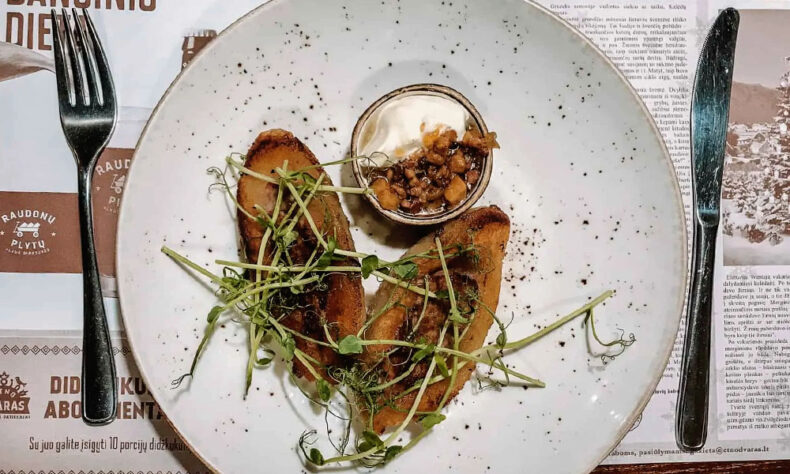
Photo on Pinterest
Cepelinai are filling, hearty and best enjoyed when you have time for a proper meal. You’ll find them in traditional restaurants across the country, from Vilnius to Palanga and smaller towns.
Lithuanian cuisine is ideal for travellers who like potatoes, rye bread, dairy, mushrooms and seasonal flavours. In summer, also try šaltibarščiai, the bright pink cold beetroot soup that has become one of Lithuania’s most recognisable dishes.
Easter traditions come with a special character
In Lithuania, Easter eggs are not only associated with bunnies. Traditional stories also feature Velykų Bobutė, or Easter Granny, who brings decorated eggs to children. The Easter Bunny helps decorate the eggs and prepare the cart, but Easter Granny is the one with the starring role.
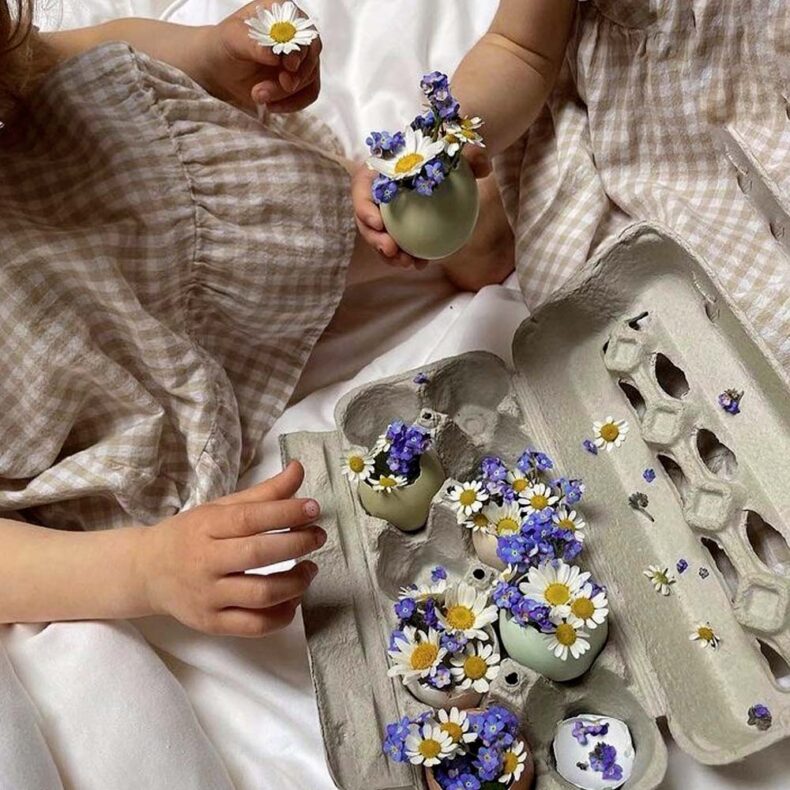
Photo on Instagram
Egg decorating is an important part of the holiday. Traditional methods often use wax, natural dyes and patterns inspired by nature, the sun and old symbols. The result is more than decoration, it’s a small piece of folk art.
If you visit Lithuania around Easter, look for local craft markets or workshops. They’re a good way to see traditional patterns and learn how eggs are decorated by hand.
Vilnius goes green for St Patrick’s Day
Every year, the Vilnia River in Vilnius is dyed bright green for St Patrick’s Day. The idea was inspired by a tradition from Chicago, where the river is also coloured green using an environmentally safe dye.
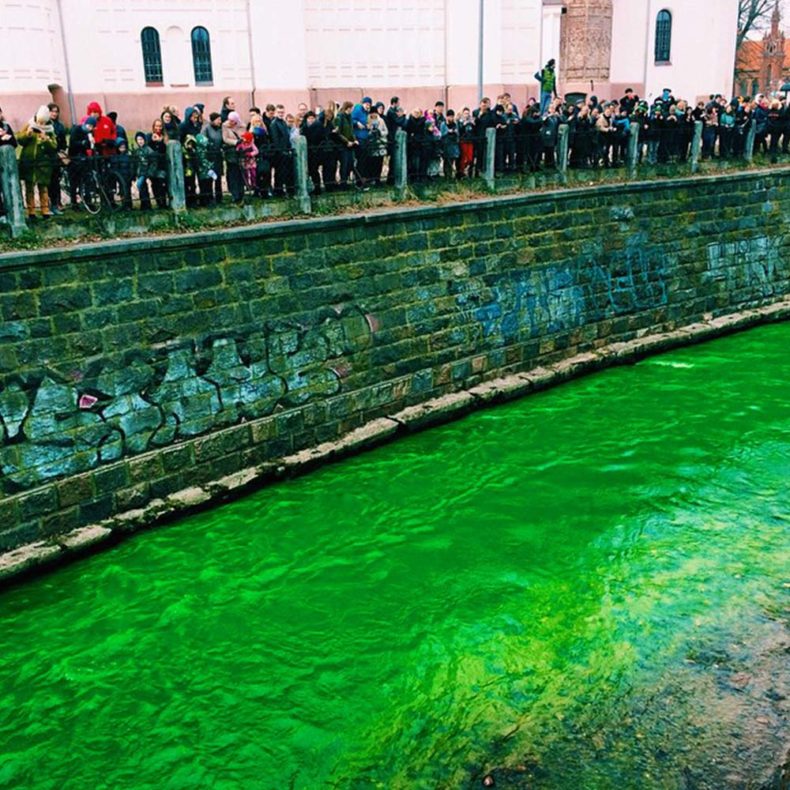
Photo on Instagram
It may sound unexpected in the capital of Lithuania, but it fits Vilnius well – the city enjoys playful public events, seasonal festivals and creative urban traditions. If you’re visiting in March, this is one of the more unusual moments to catch.
The green river is usually best seen from bridges and riverbanks near the city centre. Combine it with a walk through Užupis or the Old Town.
Lithuania is home to one of Europe’s oldest oaks
The Stelmužė Oak in north-eastern Lithuania is one of the country’s most remarkable natural monuments. It is often described as the oldest oak in Lithuania and one of the oldest in Europe, with age estimates commonly reaching 1,000-1,500 years or more. Exact dating is difficult because the inner part of the trunk has been damaged over time.
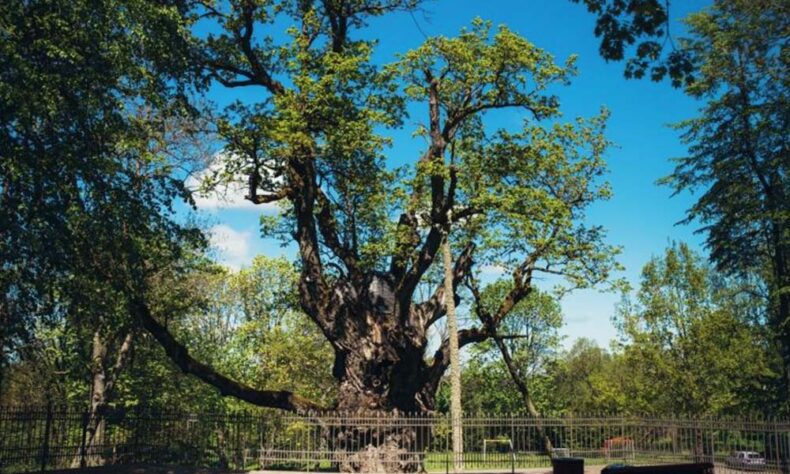
Photo on visitZarasai
This is not a quick city-centre stop, but it’s a memorable place for travellers who enjoy nature, folklore and slower routes through the countryside. The tree feels less like a tourist attraction and more like a witness to centuries of Lithuanian history.
Stelmužė is best included in a longer trip through north-eastern Lithuania, especially if you’re travelling by car.
Vilnius hides a fragment of its medieval wall
In Vilnius, even ordinary-looking streets can hide pieces of history. On Miesto Sienos Street, which means “Town Wall Street”, you can see a surviving fragment of the city’s medieval defensive wall.
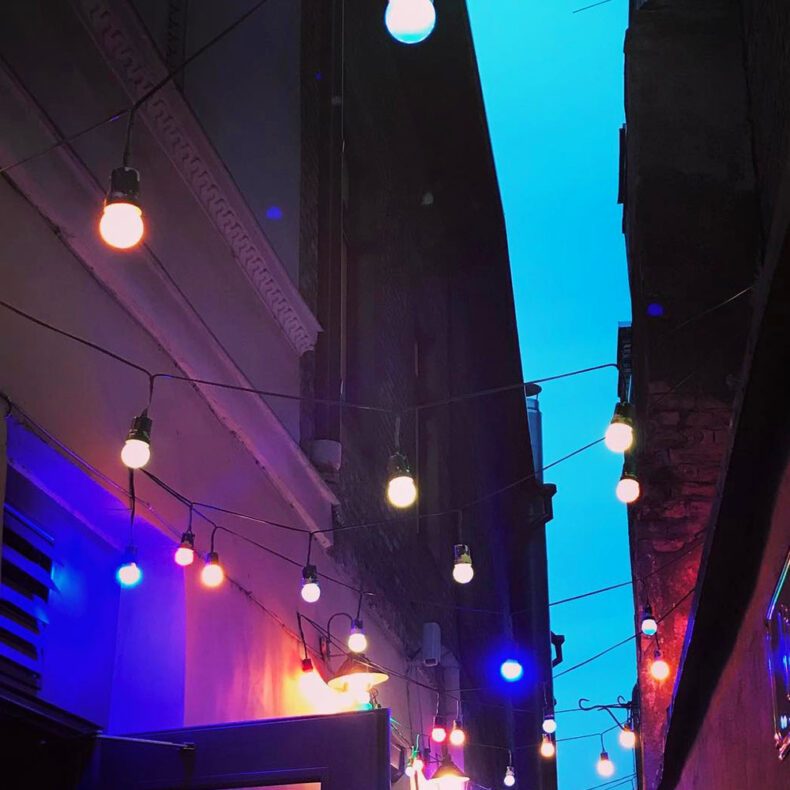
Photo on Instagram
This is the kind of small discovery that makes Vilnius rewarding to explore on foot. Instead of rushing only between major sights, take time for side streets, courtyards and alleyways. They often reveal older layers of the city.
Add this stop to a walk through the Old Town. It works well together with the Gate of Dawn, Town Hall Square and the narrow streets around the historic centre.
Lithuania has its own scent
Lithuania even has an official-inspired fragrance known as The Scent of Lithuania. It combines notes such as wild flowers, ginger, raspberry, sandalwood and musk: an attempt to capture the country’s forests, meadows, warmth and identity in one aroma.
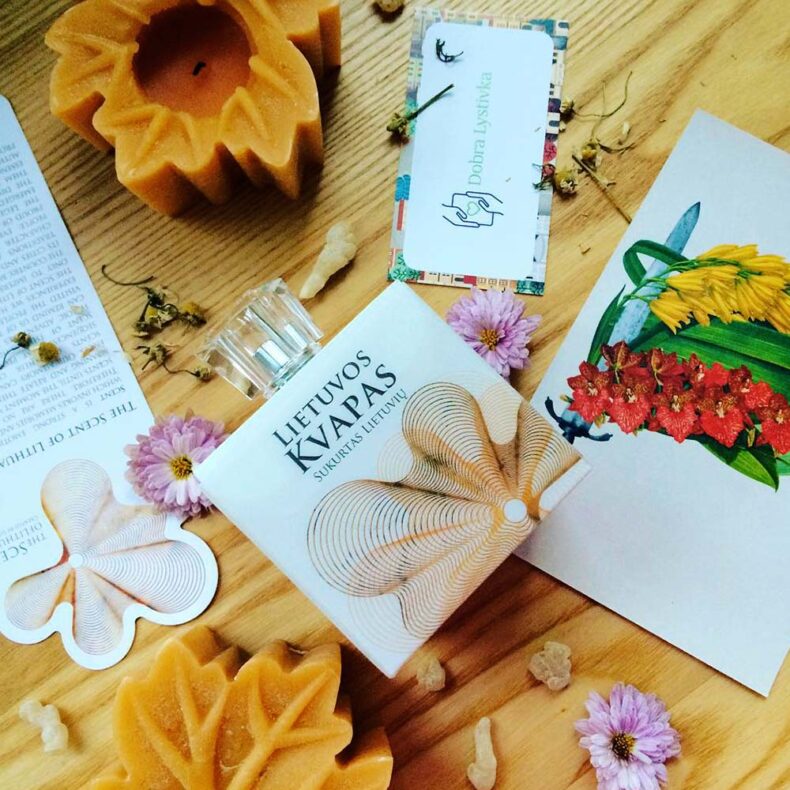
Photo on Instagram
It’s an unusual souvenir because it tells a story rather than simply showing a landmark. For travellers who like design, local brands and unexpected gifts, it’s a more original choice than a fridge magnet.
Look for local concept stores, museum shops or design boutiques in Vilnius if you want to bring home something connected to Lithuanian identity.
Lithuania celebrates independence twice
Lithuania has two major independence-related dates. February 16 marks the restoration of the State of Lithuania in 1918, while March 11 marks the restoration of independence in 1990 after Soviet occupation. These dates are important to understanding modern Lithuania’s identity and why national symbols, including the Lithuania flag, carry such emotional weight.
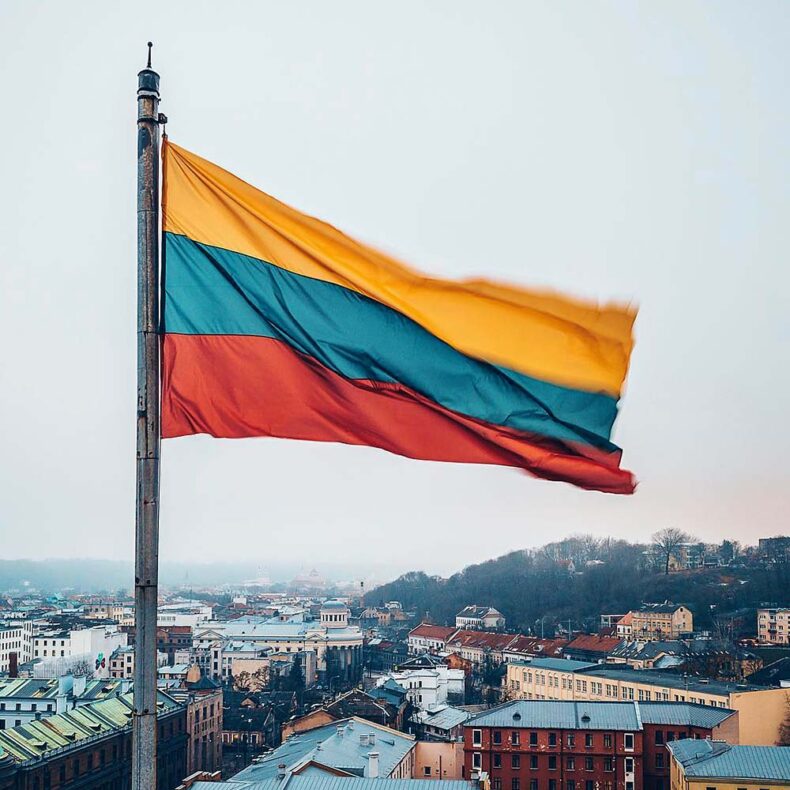
Photo on Instagram
The Lithuanian flag is a horizontal tricolour of yellow, green and red. The colours are often explained through the country’s landscape and history: yellow is linked with the sun and prosperity, green with forests, countryside, freedom and hope, and red with courage and sacrifice.
You’ll see the Lithuania flag flying on public buildings, during national holidays and at major cultural or sports events. It is especially visible on February 16 and March 11, Lithuania’s two independence-related national days.
Lithuania also has a historical flag featuring the Vytis, a knight on horseback. You may see it at official sites, museums and during national celebrations.
Fly to Lithuania with airBaltic
Whether you’re planning a weekend in the capital of Lithuania, a summer escape to the Baltic coast or a longer trip through the country, airBaltic makes it easy to book flights to Lithuania. Choose flights to Vilnius for culture, history, food and city breaks, or flights to Palanga for sandy beaches, seaside walks and easy access to Lithuania’s coast.
Vilnius is the best starting point for first-time visitors, while Palanga is ideal for summer holidays and trips to the Baltic Sea. Pair them together, and you’ll get two very different sides of Lithuania in one journey.