Riga reveals itself through its contrasts and transitions, making it one of the most rewarding cities to explore in Latvia. From the Art Nouveau architecture of the Quiet Centre to the medieval streets of Old Riga, from the sweeping views of the Daugava River to the more local, human-scale neighbourhoods of Pārdaugava, the city offers a rich mix of experiences.
Visitors can discover ornate façades, wooden houses, historic stone architecture, vibrant markets, and a growing contemporary culture scene all within a compact city centre. These shifting atmospheres are what make Riga more than a list of sights – it is a dynamic destination and a complete travel experience for anyone seeking things to do in Riga, Latvia.
- Riga Quiet Centre: Art Nouveau architecture and the historic city centre
- Sporta 2 Quarter, Riga: creative district, contemporary culture and urban regeneration
- Riga Daugava Embankment: National Library of Latvia, Old Town views and Victory Park
- Āgenskalns, Riga: wooden houses, local markets and suburban charm
Riga Quiet Centre: Art Nouveau architecture and the historic city centre
I stand in front of the building at Alberta iela 4 and look up – the façade rises like a frozen scene from a theatre production. Above me, Medusa heads with mouths agape, lion figures, sphinxes, and various decorative motifs seem to compete for attention.
At first glance, it seems like pure adornment: elaborate props, a whim of the imagination, a display of status. Yet behind this abundance of mythological figures and ornaments lies a very specific historical moment.
At the turn of the 20th century, Riga was growing at an extraordinary pace. It had become one of the most important Baltic Sea ports in the Russian Empire – an industrial centre, a railway hub, and a city where the empire’s interior met the markets of Western Europe.
People, goods, and capital flowed through Riga, and this movement was reflected in the architecture: in new neighbourhoods, new apartment buildings, and stately façades.
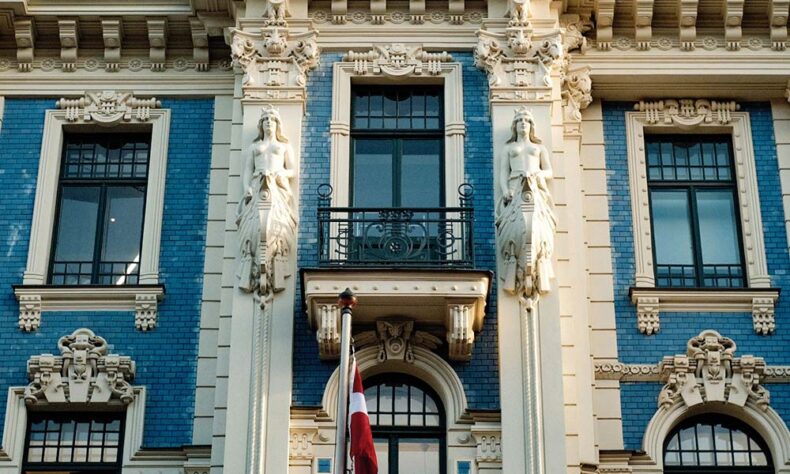
Photo source: Unsplash
At the same time, a new aesthetic in architecture and design was taking hold in Europe. Called Art Nouveau in France and Belgium, Jugendstil in the German speaking world, and the Secession style in Austria, it rejected the imitation of historical styles and sought an architectural language appropriate to the modern era.
For Riga, which was growing rapidly and seeking a new identity, this language proved particularly suitable. It allowed the city to be European and modern while simultaneously developing its own distinctive visual identity.
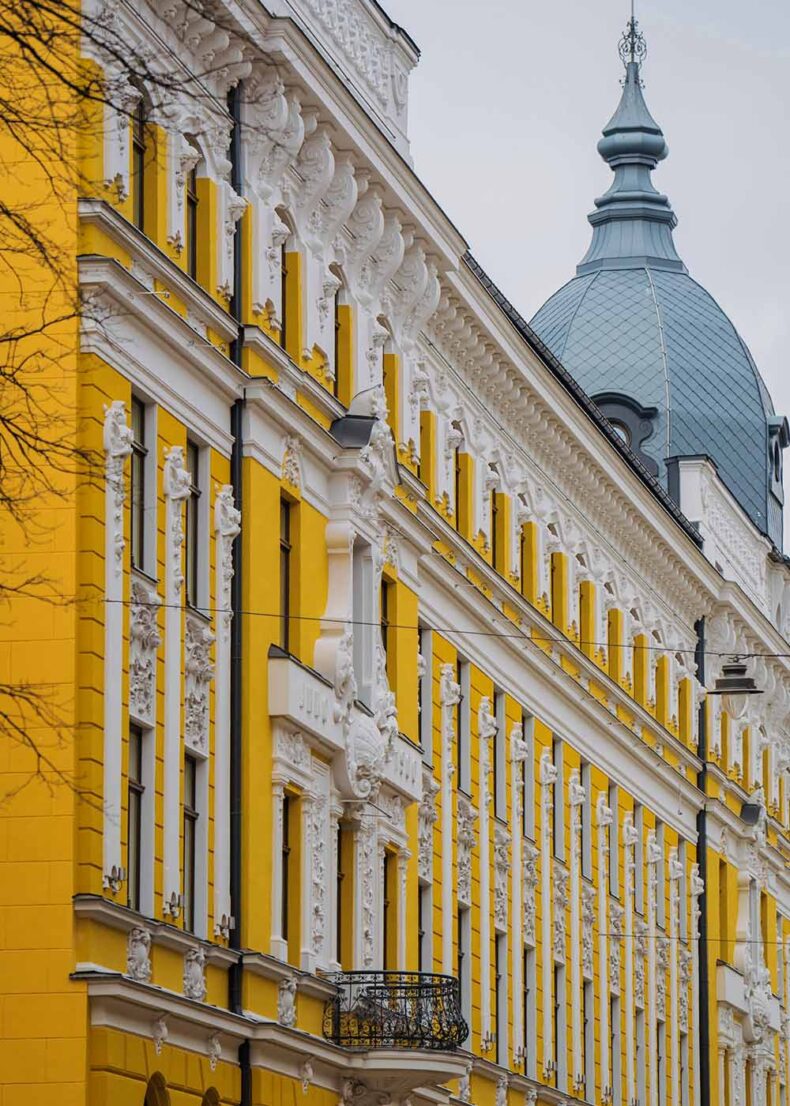
Photo source: Live Riga
On Alberta iela, this style comes to life in the theatrical façades designed by Mikhail Eisenstein, one of Riga’s most prominent Art Nouveau masters, transforming the buildings into sculptural urban decorations.
At Alberta iela 8, the eye is drawn to the lion’s head, female mascarons, and monster faces above the windows, while at Alberta iela 2a, the sphinxes are not just façade ornaments – they jut out into the street and become true guardians of the building.
At Alberta iela 13, the façade theatre takes on particularly intense expression: the female figure appears in mascarons, busts, and dramatic faces ranging from dreamy tenderness to mouths open in screams.
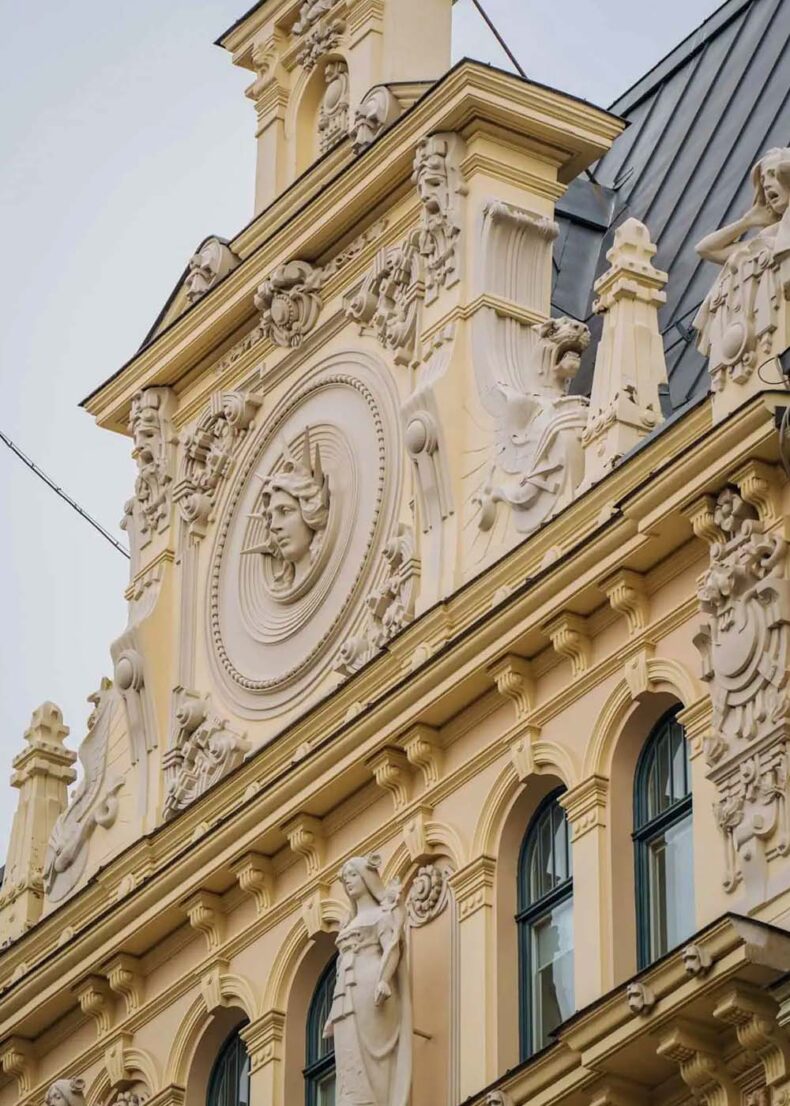
Photo source: Live Riga
Yet behind the ornate building fronts, everyday life continues, with restaurants, small shops, and evening spots that let one experience Art Nouveau as a part of the city’s daily rhythm. And right alongside it all, Art Nouveau also reveals itself in the more traditional form of a museum.
At Alberta iela 12 stands the Riga Art Nouveau Centre – the only museum in the Baltic states dedicated to the cultural and historical heritage of the Art Nouveau style.
Set in a building designed by Konstantīns Pēkšēns in 1903, the theatricality continues inside, with a magnificent spiral stairhall, decorative wall painting, and an authentic Art Nouveau apartment complete with a living room, dining room, and kitchen.
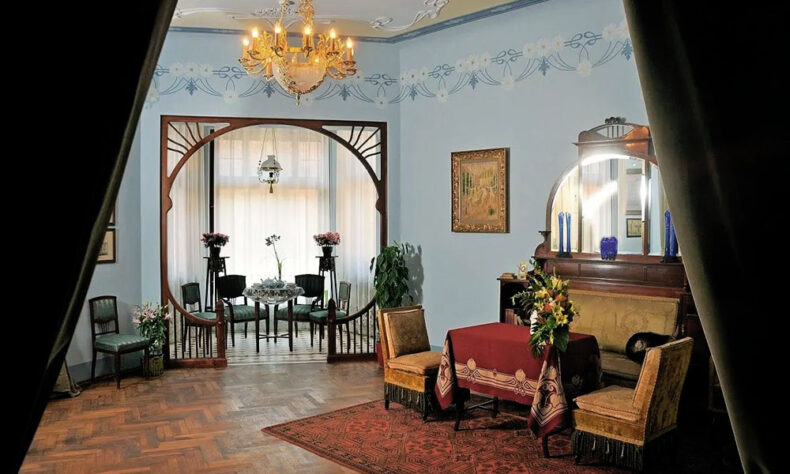
Photo source: Live Riga
I also stroll down Ausekļa iela, which is one of those places in the Quiet Centre where the city’s rhythm slows down and becomes almost intimate.
The day is beginning on the café terraces. At Street Fries Kitchen, breakfast smells of waffles, pancakes, and other hearty foods inspired by Flemish cuisine, while Mulberry has established itself as one of the neighbourhood’s favourite bakeries, offering fresh bread, croissants, pastries, and coffee.
As the day progresses and evening nears, Ausekļa iela gradually shifts into a different rhythm: the elegant Portofino prepares to serve Italian dinners, while Shōyu (which has been recognised with a Michelin Bib Gourmand for several years) brings ramen culture to the neighbourhood.

Photo source: Tripadvisor
Incidentally, in this part of the Quiet Centre, gastronomy also intertwines with culture. For several decades now, the Daugava Gallery at Ausekļa iela 1 has been one of the most significant art spaces in Riga, while the nearby Pauls Stradiņš Museum of the History of Medicine at Ukrainas Neatkarības iela 1 offers a completely different perspective on the human body, science, and the history of medicine from the Middle Ages to space-age medicine.
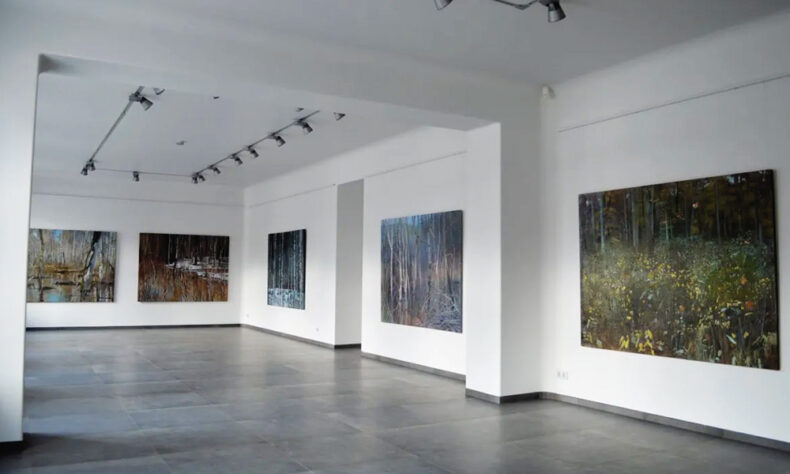
Photo source: Live Riga
On Antonijas iela, Space Falafel brings the energy of Israeli and Mediterranean cuisine to Riga (think hummus, falafel, and freshly baked pita), while the fire-breathing winged Art Nouveau dragons above the building’s portal remind us that even this everyday dining spot sits in an architectural spectacle.
Across the street, Truff Le Pig sets a completely different mood – it’s a wine and Champagne bar with an internationally acclaimed wine list.
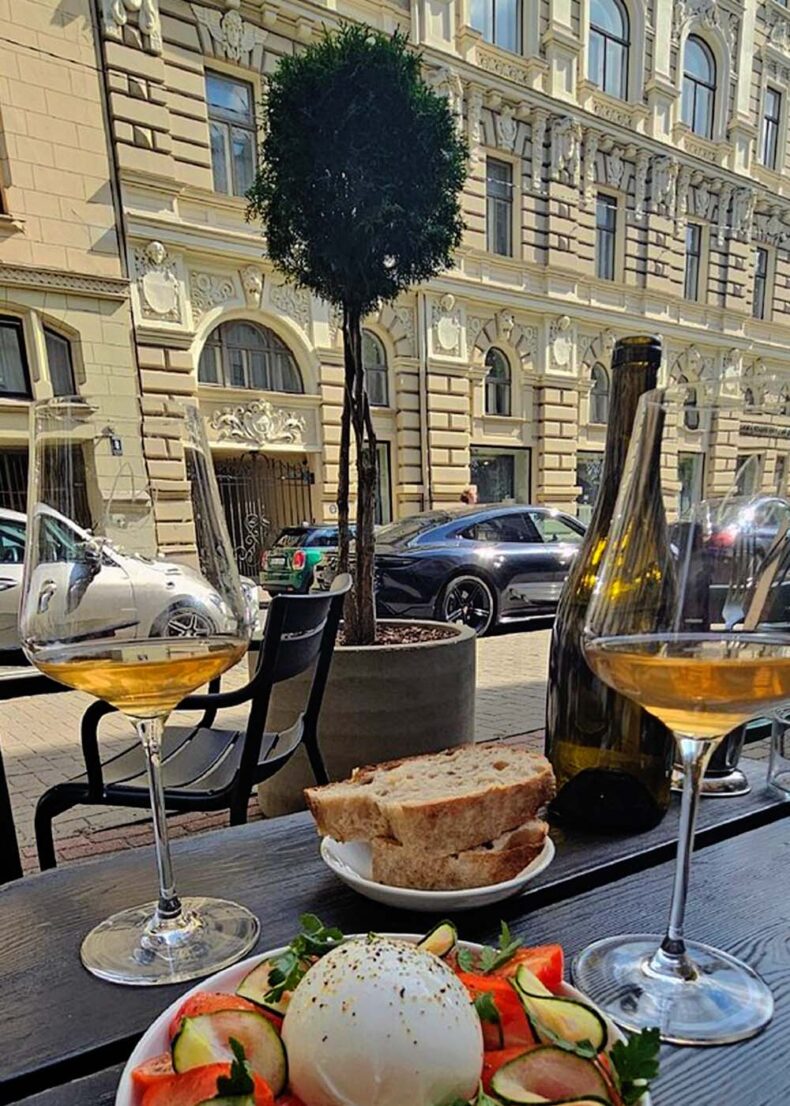
Photo source: Tripadvisor
Continuing along Dzirnavu iela to the corner of Krišjāņa Valdemāra iela, I arrive at one of the most striking landmarks in the Quiet Centre. Here, a restored building featuring Atlantean figures and decorative sculptures by Augusts Folcs (Volz) marks an almost symbolic exit from the neighbourhood.
Sporta 2 Quarter, Riga: creative district, contemporary culture and urban regeneration
The Sporta 2 Quarter represents the new cultural geography of Riga, because Riga’s story does not end with the Art Nouveau façades of the Quiet Centre.
I move now to a different edge of town, where the city is currently undergoing its next cycle of transformation – here we’re no longer in the era of decorative apartment buildings but in an old industrial area that’s gradually becoming a new hub of culture and public life.
The Sporta 2 Quarter is centred around a former candy and sweets factory, where the industrial environment is turning into a vibrant part of the city with contemporary culture, creative industries, and culinary hotspots.

Photo source: Live Riga
The neighbourhood is still undergoing development, but it’s already lively enough to let a visitor feel the pulse of modern Riga. The Sporta 2 Quarter usually comes to life in the evening, when the area fills with people, conversations, exhibition openings, dinners, and music.
The Kim? Contemporary Art Centre brings an experimental, internationally oriented contemporary art programme to the neighbourhood. When exhibitions open, it really starts humming, as representatives of creative professions, students, artists, and others close to the art scene as well as members of the city’s subcultures gather here.
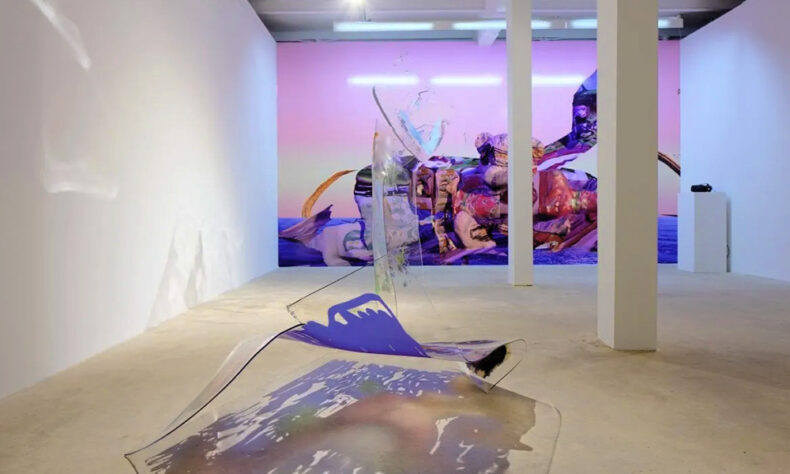
Photo source: Live Riga
The Linstow Art Award art studio provides a working environment for young Latvian artists, while OratoriO – a small venue for music, theatre, and the performing arts – gives the quarter a more intimate, informal dimension.
Alongside the cultural scene, this neighbourhood is also home to informal dining spots: Project Chicken with an industrial aesthetic, cocktails, DJ nights, and crispy street-food burgers; Objekts x Boar BBQ with Georgian cuisine, khinkali, and a bohemian courtyard vibe; and Zefīrs with neo-Neapolitan pizzas and the carefree atmosphere of a sunny terrace.

Photo source: Live Riga
The Sporta 2 Quarter is not a classic tourist destination with a polished façade and a finished story. Instead, it’s a place where Riga can be seen in a moment of transition – the edge of the historical urban centre that’s slowly transforming from an industrial backwater into a new stage for urban life.
Riga Daugava Embankment: National Library of Latvia, Old Town views and Victory Park
The Stone Bridge (Akmens tilts) is not just a practical link between the two banks of the Daugava but a scenic journey from one era to another. Stepping out onto the Daugava embankment, a grand waterfront landscape unfolds before you.
In Riga, the river reaches a width of about 650–700 metres. Behind you lies Old Riga with its church towers and riverfront, while across the water, the Pārdaugava district opens up with the angular form of the National Library of Latvia.
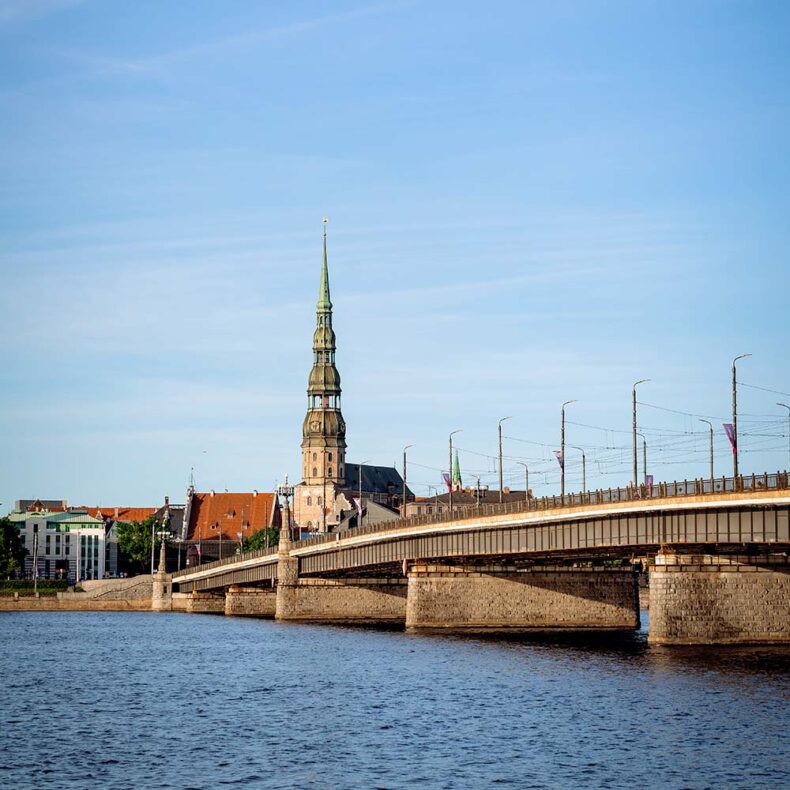
Photo source: Live Riga
It is from this vantage point that the library reveals itself most clearly: its upward-reaching asymmetrical silhouette rises above the left bank of the Daugava as a modern counterpoint to the towers of Old Riga.
The building was designed by the Latvian-American architect Gunārs Birkerts, one of the most internationally renowned figures in Latvian architecture, and it opened to visitors in 2014.
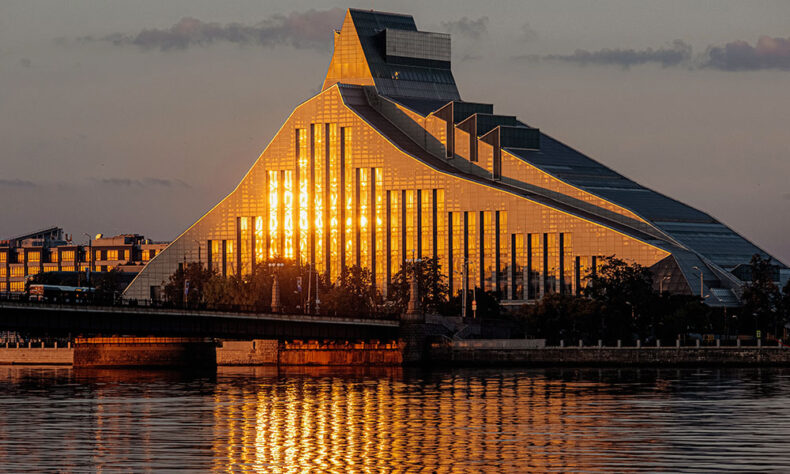
Photo source: Live Riga
At the library one can view exhibitions, tour the building with a multilingual digital audio guide, and ascend to the upper floors, which offer a sweeping view across the Daugava River to Riga’s historical centre, which is a UNESCO World Heritage Site.
Old Riga’s silhouette is shaped by a combination of low historical buildings and vertical accents, including the Three Stars Tower of Riga Castle, the Town Hall (Rātsnams) tower, and the spires of eight churches, which together form a line of rises and falls across the city that resembles a cardiogram.
Against this backdrop, the new library – which is also known as the Castle of Light – is not just a modern architectural landmark but also a symbol of knowledge, spiritual awakening, and the cultural self-confidence of independent Latvia.
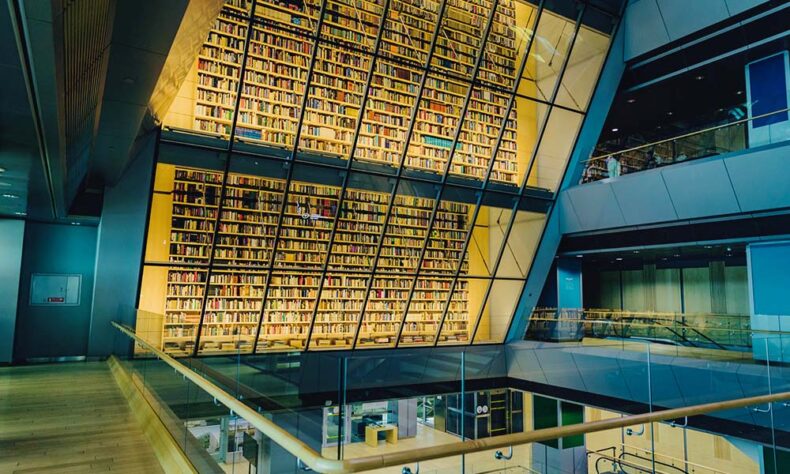
Photo source: Live Riga
Victory Park, known as Uzvaras parks in Latvian, is located near the library. If the Quiet Centre tells the story of Riga’s boom at the turn of the 20th century, Old Riga represents the city’s medieval core, and the library embodies the cultural ambitions of modern Latvia, then Victory Park reveals yet another layer of Riga’s history.
The park was named in honour of the Latvian army’s victory over Pavel Bermondt-Avalov’s forces in 1919, but during the Soviet era, an imposing monument to the Red Army was erected at its centre, which for a long time made this place feel ideologically oppressive.
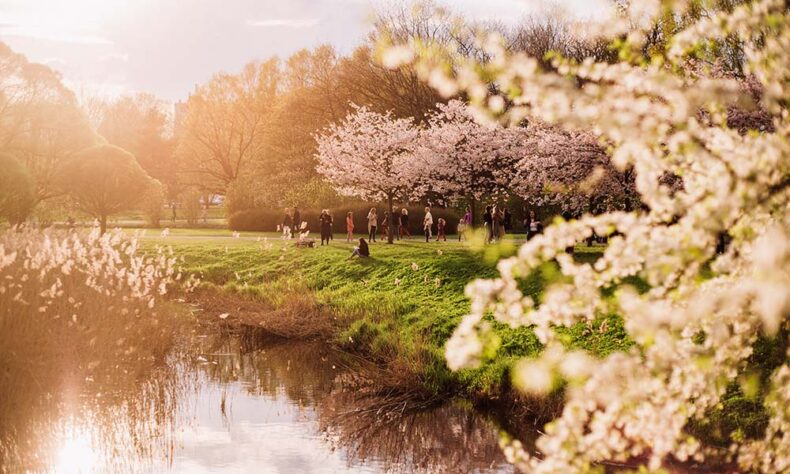
Photo source: Live Riga
Following Russia’s full-scale invasion of Ukraine in 2022, the monument was demolished, and the park is gradually regaining a more open, scenic, and everyday character. Monumental symbolism no longer dominates here; instead, the eye is drawn to the flow of the Mārupīte River, the trees, the gravel paths, the meadows, the sports fields, and the children’s play areas.
People spend their free time here or simply pass through the park on their daily routines, and there’s something deeply liberating about this: a place that was long a symbol of a difficult history is finally becoming a vibrant, functional part of the urban landscape.
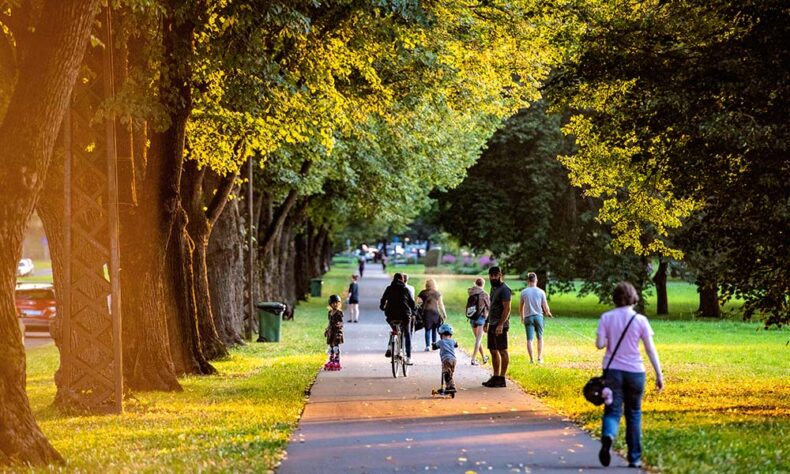
Photo source: Live Riga
Āgenskalns, Riga: wooden houses, local markets and suburban charm
Right next door, Āgenskalns is a neighbourhood of Riga where the cityscape becomes lower-lying, greener, and more human in terms of scale. Here, the city speaks with a different voice: through wooden houses, porches, gardens, picket fences, old gateways, and small decorative details that give the streets a more private, suburban character.

Photo source: Live Riga
The wooden buildings of Āgenskalns were constructed mainly between the mid-19th to the mid-20th century, and their character is defined by the material itself: painted boards, horizontal and/or vertical siding, carved wooden window frames, balcony railings, pretty veranda glazing, and weathered façades where the craftsman’s touch is still evident.
This neighbourhood reflects various eras, from simple wooden buildings rooted in the traditions of Classicism to Art Nouveau influences with asymmetrical façades, plant motifs, and intricate wood carvings. In a way, this takes us back to the beginning of our city walk. That is to say, Art Nouveau in Riga is not confined to the opulent buildings of the Quiet Centre; it has also found its way into the wooden architecture of the suburbs, albeit more modestly, closer to everyday life.

Photo source: Jānis Jēkabsons
At the end of my walk, I arrive at Āgenskalns Market, which has been in operation since 1898 and is the largest and oldest market on the left bank of the Daugava. Indeed, even from the outside, the renovated red-brick pavilion with its tall windows and striking entrance arch looks like the neighbourhood’s anchor.
But the true punch of this space is revealed upon entering. Your gaze is immediately drawn upward to the metal structures, the spacious hall, the gallery level, the light streaming in from the large windows, and the chandeliers that lend a sense of grandeur to the market’s industrial architecture.

Photo source: Live Riga
On the first floor, the market smells of fresh bread, coffee, fish, spices, and flowers, but its character is shaped by small, special finds: kimchi made from Latvian cabbage, ramson pesto, salted cucumbers, venison dumplings, jars of spices, Icelandic fish and caviar, banana bread, and craft ice cream.
On the second floor, the market becomes a modern Pārdaugava living room. Start with coffee, craft beer, cider, or a cocktail at the Vest Riga bar counter; then order an oven-baked pizza from the locally beloved Vīnkalni pizzeria or some classic Ukrainian food at Borščs.
In the courtyard, the aroma of Uzbek pilaf cooked for four hours wafts from Bahtijara’s large cauldron. Food and drinks are enjoyed at communal tables from which you can observe the market’s expanse, the flow of people, and the architecture of the renovated pavilion.

Photo source: Tripadvisor
On weekends, the market comes alive with artisans, designers, vintage shops, flea markets, children, dogs, and neighbourhood chatter, and the historical space is once again filled with voices, smells, and everyday life.
A walk that began amid the theatrical opulence of Art Nouveau buildings concludes in Āgenskalns with a completely different atmosphere – at the market tables, with coffee, conversations, delicious aromas, and the unhurried rhythm of the Pārdaugava district. Perhaps this is how Riga reveals itself best: in the transitions between eras, shores, and moods, until the city transforms from history into a lived experience.

Photo source: Live Riga
Read more about Riga in Baltic Outlook.
Text by Agnese Čivle
Cover photo source: Unsplash