Latvian actor Kārlis Arnolds Avots, who is one of the most distinctive voices in contemporary Baltic cinema, has emerged as a bold new presence on both stage and screen. From acclaimed theatre work in Riga to international recognition at the Cannes Film Festival with Ulya, and with upcoming roles in major productions such as Bloodaxe, he’s part of a generation redefining the reach of Baltic acting talent.
Much of the attention surrounding Avots this year has centred on Ulya (Uļa in Latvian), the striking new film by Latvian director Viesturs Kairišs. It’s a project that had long been a deeply held creative ambition for Avots. Premiering in the Un Certain Regard section at the 79th Cannes Film Festival, the film was met with extended applause and quickly became one of the standout titles of the selection. Shot in a stark black-and-white aesthetic, Ulya draws on the early life of legendary Latvian basketball player Uljana Semjonova (1952–2026). At its heart, it’s a film about identity in formation – about first experiences, belonging, and the uneasy process of finding one’s place both socially and professionally. Avots’ portrayal of Uljana, or Ulya, is deliberately restrained and internal; she becomes a kind of mirror, a resonator, an outsider observing the world as much as inhabiting it. It is, in his words, a work attuned to what he calls ‘the nerve of the age’.
Beyond Ulya, Avots has become one of the most active and promising figures of his generation in Latvian theatre and film, increasingly working across borders. At the Dailes Theatre in Riga, his recent stage roles have included Simon in The Caucasian Chalk Circle, Agnes in Brand, and Ivan the Homeless in The Master and Margarita. His longstanding collaboration with Kairišs has also proved pivotal on screen, most notably in the historical drama January, for which he received Latvia’s national film award for best actor.
Avots later drew further acclaim for his lead role in the series Soviet Jeans, playing an anti-heroic, opportunistic figure navigating the absurdities of late Soviet capitalism. The performance earned him another national film award, confirming his range and willingness to inhabit morally ambiguous characters.
In 2025, Avots’ profile rose further internationally when he was named one of Europe’s most promising film talents as a European Shooting Stars laureate at the Berlinale. Since then, he has continued to expand his work abroad, most notably through Bloodaxe, a large-scale Viking series expected to premiere in January 2027.
And yet, despite the momentum – the awards, the premieres, the growing international attention – Avots remains notably grounded. There’s a quiet deliberation to the way he speaks about his work and a consistent sense that he’s already thinking several steps ahead, less concerned with arrival than with direction.
Do you think the role of Ulya was a kind of threshold moment after which you’re no longer quite the same? Have you changed, personally and professionally?
(Avots thinks for a moment.) Absolutely. Looking back now, I realise the project gave meaning to being an actor. First of all, it gave me a very concrete sense of why it’s worth doing this at all – because it can be something far greater than just a profession. And secondly, with this role I wasn’t afraid to be bold and courageous. None of us were afraid to expose ourselves, to stay under pressure, so to speak. And I think that’s one of the purposes of art.
I also believe Ulya will really strike a nerve. There will be admiration, there will be criticism, and I’m not sure I’ll ever do anything quite as personally exposed again. Ulya and I shared a genuine friendship, and during the making of the film there was also a sense of having to say goodbye to her.
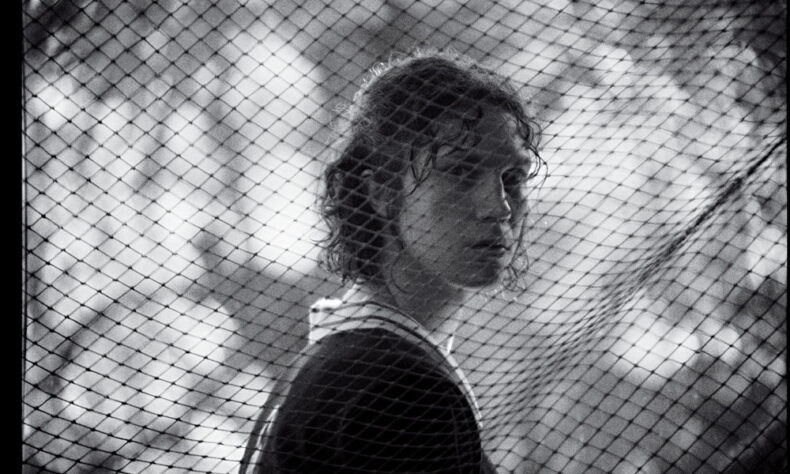
Photo by Andrejs Strokins
You and Uljana also lived quite close to one another. You were practically neighbours?
Yes, she lived in the next house over. I lived on Antonijas iela, and she was on Dzirnavu iela. I visited her a few times. But when the idea of telling her story first came to me, it wasn’t like that at all – I had no idea I’d eventually move and end up living even closer to her.
I first came across Ulya when I was still a child. My mother often took me to the sports museum, where Uljana had her own room. I remember being fascinated by those oversized shoes, the shining medals, the rings, the training gear. And of course her height, her dominance on the court. She was such an iconic player, unlike anyone else.
You’ve spoken about responsibility and courage. When it comes to the character of Ulya, was your main focus less on gender and more on portraying a universal human being?
When the idea took hold, I didn’t even question whether someone might see it as unusual or find it unacceptable that I play the role of Ulya. I fairly quickly came to the conclusion that I had every right to do so.
When I was still a student and began taking this idea to directors, my tutor Prof. Daina Teters became very interested in it. At one point I even considered developing the project together with her. She reassured me and suggested I look into Japanese kabuki and onnagata theatre. So I immersed myself in the philosophy of those forms, which, due to specific restrictions, historically did not allow women and children on stage.
Just like in the English Renaissance, Shakespeare’s time.
Yes, and their idea – their justification, really – is that they do not caricature or parody women. Instead, the actors try to approach an essence. One could argue that gender does not define a person’s entire identity: I cannot judge you solely by your gender, just as you cannot assume I am strong simply because I am a man.
But we end up stereotyping.
Yes, stereotyping. In fact, that was what inspired me. To take on a challenge like this is to move directly against stereotypes. It means trying – in a genuinely deep way, not in a caricatured manner – to understand the human inner world, not a specifically ‘female’ or ‘male’ one. Regardless of anything else, this is a story anyone can relate to.
And it was precisely kabuki that defined this higher aim: to understand a poetic, structured energy, to come closer to essence rather than biologically imitating or parodying something else. The attempt is performative proximity. I think the film works on those levels, because sometimes I’m very far from Ulya, and at other moments I overlap with her. In a sense, I say goodbye to her in the film through our shared photograph [In the film’s epilogue, Avots and Semjonova appear together in a photograph. – Ed.].
By taking a fixed position, you exclude the possibility of a full experience – and that, for me, is one of the most important things art can offer. The director Cristian Mungiu, who won the Palme d’Or in Cannes, said in a press conference that when you’re a viewer, you cannot adopt a purely conservative or progressive stance, because that prevents us from re-evaluating ourselves and our own opinions.
I believe people lose something when they deny themselves experience, when they don’t allow themselves to feel. We analyse too much, structure too much, think, rethink, overthink. Of course, all of that is important, but we must not lose the ability to approach experience emotionally. If everything is rationalised, it becomes very difficult to reach the soul. That, to me, is the fundamental task of an actor in cinema or theatre: to reflect inner life and the soul, and that does not necessarily need words. And I think that in the concept of gender, the world has become somewhat lost.
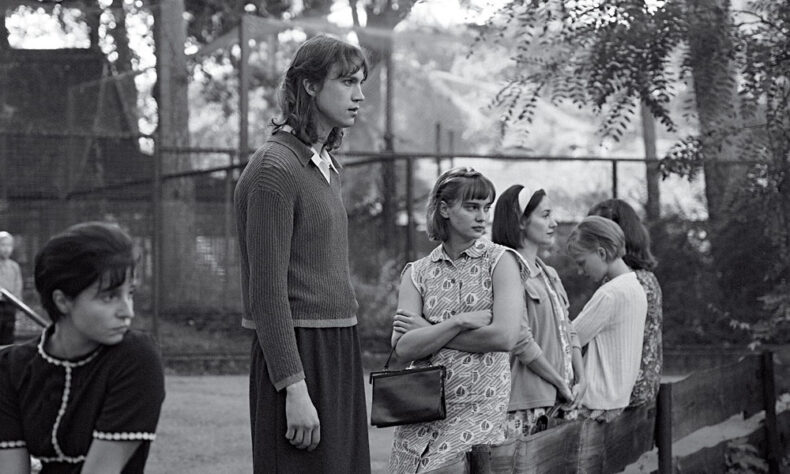
Photo by Andrejs Strokins
Do you feel that factors such as age, background, and physical ability also limit the kinds of experiences we’re able to have? And as a result, they shape who we are?
Yes, and that too is part of identity. That’s why, in my view, we should focus on emotional connection. At first, it hurt me; I found it rather strange that it might not be noticed. But we were prepared for that within the context of Ulya as well. What matters is that we’re sparking discussion through the film – there will be no indifference. The film has landed in a space that doesn’t align itself with anything; it’s bold in its creative choices, in its refusal to affirm commonly accepted truths.
The film challenges stereotypes and is uncomfortable, and I think it’s difficult to make this kind of cinema today. It requires courage, and a great deal must be risked without knowing what fate awaits your film, because there will be opposition and obstacles.
In our case, the fact that Cannes selected the film is a strong signal that they value Baltic cinema, bold creative decisions, and artistic standards. It’s said that it’s not so easy to make it to Cannes (smiles).
This is only the fourth feature film from the Baltic region to ever have been selected for the Cannes Film Festival. When you found yourself there, did it become clearer what the festival actually represents to you – something between fantasy, the red carpet, and bold cinema? What does Cannes mean to you personally?
I’d say it’s first and foremost a film festival – because that’s how I experienced it. I watched a lot of films. My conversations there with strangers, with people I had just met, were all about cinema, and that was the most beautiful part of it. Everything else is noise – very glamorous noise. Of course, it’s a highly elitist event. More than anywhere else, I really felt the presence of class distinctions there.
Social hierarchies?
Yes, you can feel and see them very clearly there. I’m not sure whether the system is fair – no system built on social class can really be fair – but still… (pauses) you know, I’m almost glad to have stepped away from the Cannes Festival experience now.
You feel relieved that it’s now behind you?
It overwhelmed me. As the premiere approached, I slept less and less, and I remember how I was slightly shaking as the team and I sat in the waiting room before the screening. My senses were incredibly heightened at that point.
When I returned to Latvia, I was honestly quite close to being unwell, but my immune system somehow held up. Still, it’s definitely a festival I’d like to return to with another bold piece of work.
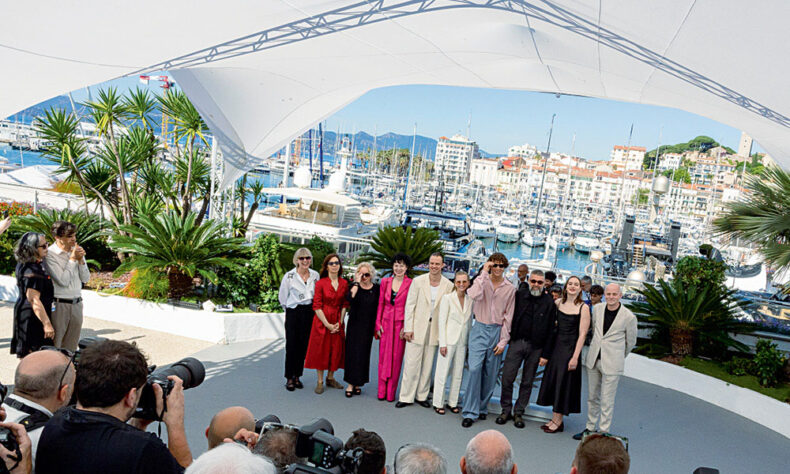
Photo by Agnese Zeltiņa
You’re increasingly visible internationally, and Latvian cinema is now often talked about as something of a mark of quality. Do you feel like Baltic cinema is still seen as marginal, or has that perception changed?
Sometimes we still are seen as marginal. I sometimes joke that I introduce myself as Carlos rather than Kārlis, because the -is ending doesn’t really make sense to other nationalities. But those are fleeting encounters, they don’t really change anything in the long run.
What feels important is that our film Ulya is a co-production between all three Baltic states and Poland. In a way, it was a shared Baltic success. I know that even major Polish directors, such as Paweł Pawlikowski, have shown interest in the film. Just recently, our cinematographer Wojciech Staroń was speaking with Yorgos Lanthimos’ cinematographer, who was very enthusiastic about it.
I think it matters that people within the industry are able to recognise the work – they can see that Baltic filmmakers are willing to make extreme, uncompromising choices. For true artists, that’s exciting. It makes them want to come here, to return, to make films here.
The ground that Ulya stands on – the risk it takes, and its presence at Cannes – makes that possible. And I’m genuinely happy for the Lithuanians as well, because they’re experiencing their own ‘new wave’, with Laurynas Bareiša at the forefront.
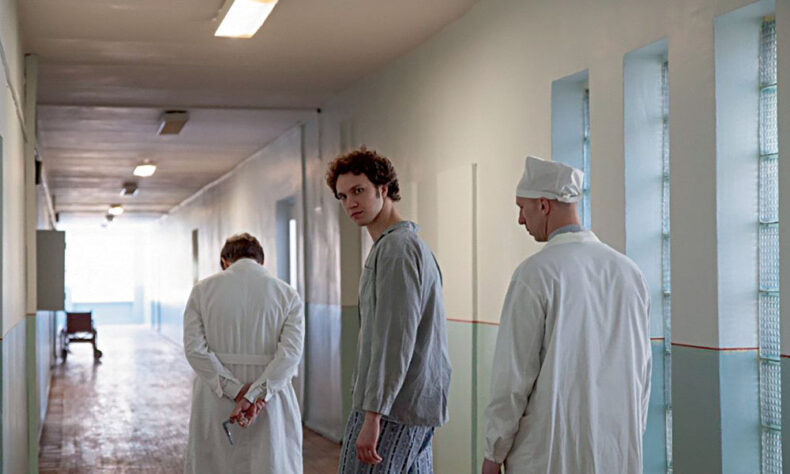
Photo by Egija Smeile
I’d like to ask you about being an actor and the opportunity to work abroad. You received the Berlinale Shooting Stars award, followed by success with Soviet Jeans and the Viking series Bloodaxe. What have you discovered about the industry that was new to you?
That actors drink a lot of Coke Zero (laughs)!
What, in your view, works differently abroad compared to Latvia in terms of acting, such as the rules of the game and the stakes?
I wouldn’t say the rules are that different, but film is extremely demanding. An incredibly large budget doesn’t mean more time – which is why they hire prepared actors whose roles are already ‘on their face’, or who’ve already presented themselves convincingly in auditions. They already know what to expect from them. […]
I truly hope my example can be useful to someone. A real surge will begin in January, when the Bloodaxe series will be available in more than 140 countries on Amazon Prime. That will be a turning point in my own career, and hopefully it will also open things up for other local actors. Many actors deserve this and would like to follow a similar path.
You’ve said before that you’re often waiting – waiting for replies, auditions, news – and therefore not always able to take on new roles. What does waiting do to you? Does it create uncertainty?
I haven’t really been in a state of insecurity since last summer; it’s been about a year now since I last felt anxious in that way. I know I have a contract for Bloodaxe, supposedly for seven seasons, although in reality it’ll probably be fewer. Still, I’m fairly certain there will be at least three seasons.
I know something is ahead for me. I already have four premieres coming up, and I know that industry professionals will see them. There’s a feeling that I’m only going to get better over time and that my value will increase. Bloodaxe will bring a lot of visibility, and with it, opportunities. My agent isn’t even sending me to auditions at the moment because he knows I’ll be away for half a year anyway.
At the same time, it can be difficult emotionally to watch my colleagues at Dailes Theatre having brilliant premieres. You look at them on stage and, as an actor with a slightly narcissistic eye, you can’t help but think: would I fit that role better? Could I shine more? (laughs) How would I play it?
I’m a maximalist – I’d like to ride two horses at once, but you simply can’t. But there are, of course, inspiring examples.
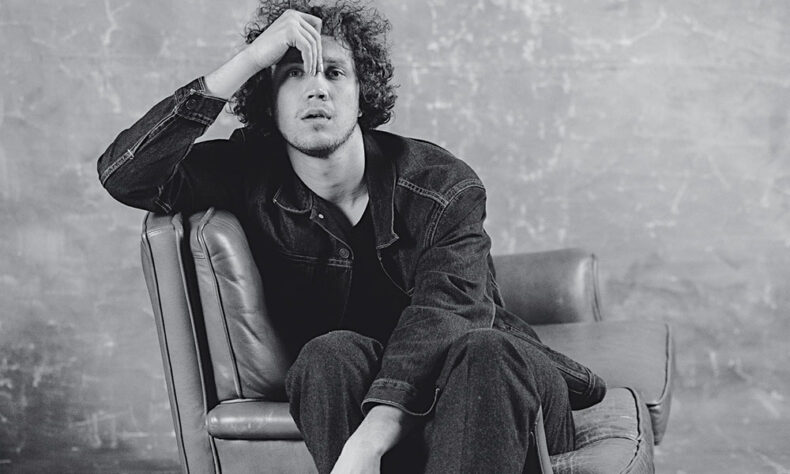
Photo by Agnese Zeltiņa
Do you worry a lot about what’s happening in society and with people?
Everything I do is subordinated to my work. When a specific topic interests me, I build what I’d call a kind of spider’s web, linking social themes, concrete examples, listening to people’s experiences, or meeting them directly. That makes the work more personal for me.
I know I’m not simply reflecting my own experience; I feel a responsibility towards the lived experience of another person who has looked at me with living eyes. Who they were when they told me their story – that’s my responsibility.
Read the full interview in Baltic Outlook.
Text by Dārta Ceriņa