From the Dolomites to the slopes beneath the Matterhorn and Mont Blanc, the Alps offer ski holidays for every kind of traveller. Milan and Turin are convenient starting points for exploring mountain resorts in northern Italy, with opportunities to venture across the borders into Switzerland and France.
Whether you prefer challenging black runs, wide pistes for building confidence, traditional Alpine villages, or a spa after a day in the snow, these eight ski resorts offer plenty of inspiration for your next winter escape. Explore airBaltic’s skiing destinations and start planning your next Alpine adventure.
airBaltic connects the Baltic capitals with Milan Malpensa and Turin, making both cities convenient starting points for a ski holiday. Milan is well placed for reaching Madonna di Campiglio, Bormio, Kronplatz, and Cervinia, while Turin provides access to Courmayeur, Monterosa, Via Lattea, and resorts across the French border.
Travellers can fly from Riga to Milan or Turin, with routes also available from Vilnius and Tallinn. Direct services and connections vary by route and travel date, so it’s worth checking the available options when planning your trip.
Ski resorts to explore from Milan
1. Madonna di Campiglio: skiing in the Dolomites
Set between the Brenta Dolomites and the Adamello-Presanella mountains, Madonna di Campiglio combines extensive skiing with the atmosphere of a classic Alpine resort. Its linked ski area offers around 150 kilometres of pistes connecting Madonna di Campiglio, Pinzolo, and Folgarida-Marilleva, so visitors can explore all three without taking off their skis.
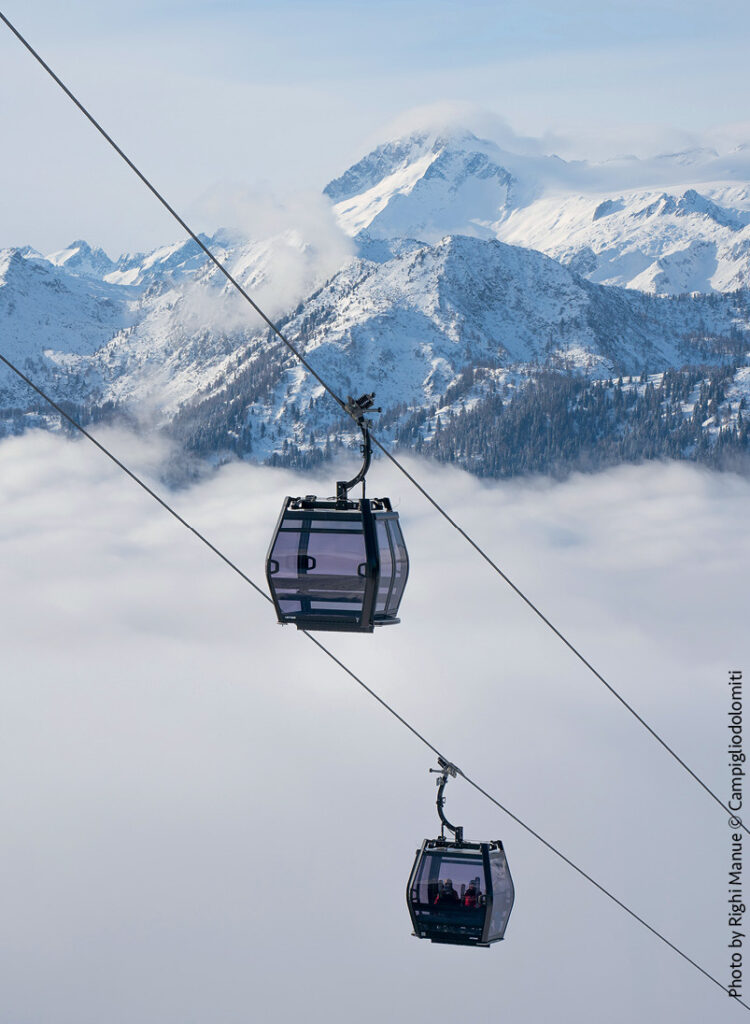
The 5.75-kilometre Dolomitica Tour descends from Doss del Sabion to Pinzolo, while the steeper Dolomitica Star appeals to confident skiers. After dark, the floodlit Canalone Miramonti offers a different way to experience one of the resort’s best-known runs.
For a relaxing stay, Lefay Resort & Spa Dolomiti near Pinzolo has an extensive spa and a transfer service to the lifts. Its Michelin-starred Grual restaurant celebrates the relationship between Alpine landscapes, ingredients, and altitude.
2. Bormio: steep pistes and historic thermal baths
In Lombardy’s Alta Valtellina valley, near the Swiss border, Bormio is a rewarding choice for experienced skiers and travellers who want to combine winter sports with wellness. Its famous Stelvio piste is known for steep sections and technical turns, and Bormio hosted men’s Alpine skiing events during the Milano Cortina 2026 Winter Olympics.
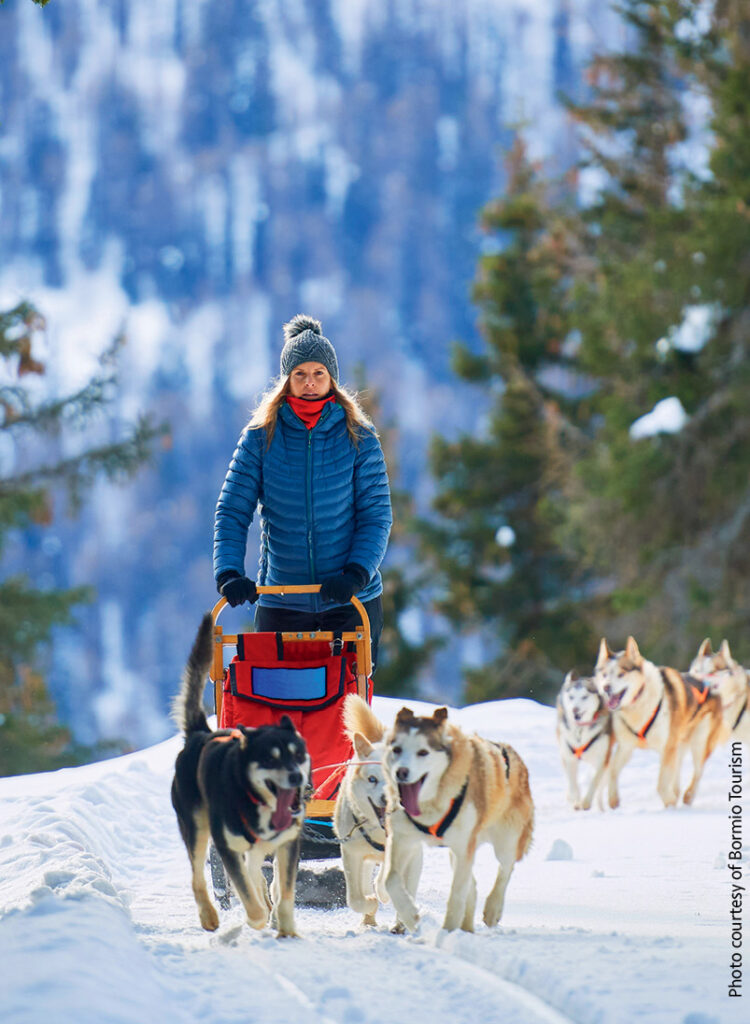
The resort also offers an approximately 1,800-metre skiable vertical descent from Bormio 3000 to the town. Beyond the marked runs, the wider Alta Valtellina area has a large network of ski-touring routes. In the nearby Santa Caterina Valfurva area, the Deborah Compagnoni slope also hosts night-skiing sessions during parts of the winter season.
After skiing, discover Bormio’s thermal bathing heritage, which stretches back more than 2,000 years. Bagni Nuovi, opened in 1836, and the QC Grand Hotel provide elegant settings in which to unwind.
3. Kronplatz: varied skiing and mountain culture
High above South Tyrol’s Puster Valley, Kronplatz offers sweeping Dolomite views and pistes leading towards Brunico, San Vigilio, and Valdaora. Experienced skiers can take on the Black Five Challenge, which includes demanding runs such as Sylvester and Hernegg.
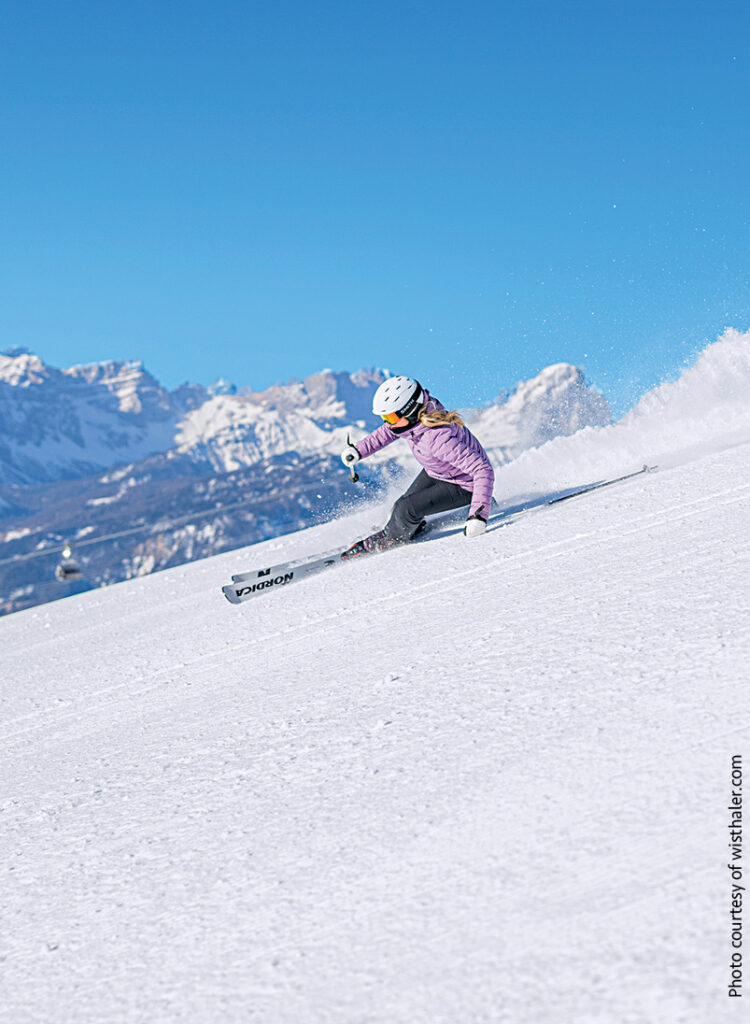
Intermediate skiers may prefer Piz de Plaies or the long Ried descent towards the Percha valley station. For gentler skiing, Plateau offers wide slopes that are well suited to practising turns.
Kronplatz is also a destination for culture and food. The Messner Mountain Museum Corones, designed by Zaha Hadid, explores the history of traditional mountaineering. In nearby Brunico, chef Norbert Niederkofler’s three-Michelin-starred Atelier Moessmer showcases seasonal Alpine ingredients, while the historic Ansitz Heufler offers a distinctive place to stay.
4. Cervinia and Zermatt: ski beneath the Matterhorn
The instantly recognisable Matterhorn rises 4,478 metres above the Italian-Swiss border. On opposite sides of the mountain, Cervinia in Italy and Zermatt in Switzerland are linked by the Matterhorn Ski Paradise area, making it possible to ski across the border when lifts and conditions allow.
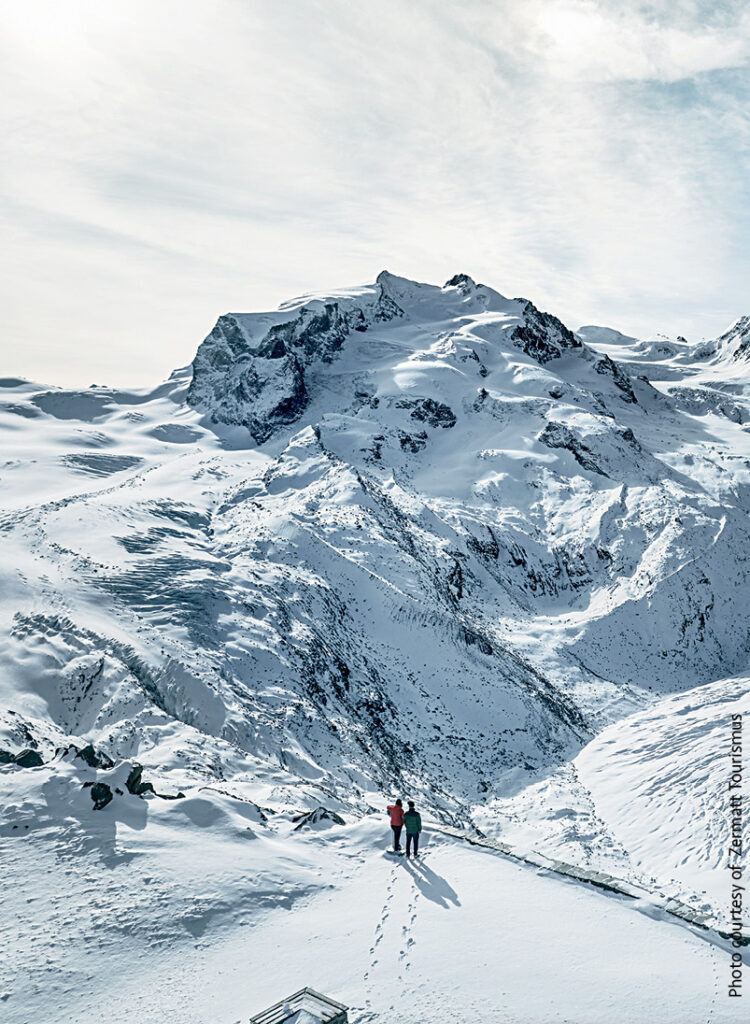
Experienced skiers can explore demanding terrain such as the Pista Nera del Cervino, while the slopes around Sunnegga and parts of the Testa Grigia–Valtournenche sector offer gentler options. Routes around Rothorn and Hirli combine skiing with memorable mountain views.
At 3,883 metres, Matterhorn Glacier Paradise is home to Glacier Palace, where ice tunnels and sculptures sit beneath the glacier’s surface. For a mountain retreat, consider Riffelalp Resort above Zermatt or Hotel Hermitage Relais & Châteaux in Cervinia, whose restaurant La Chandelle serves regional dishes.
Ski resorts to explore from Turin
Turin opens up another side of the Western Alps. From traditional Italian mountain towns to extensive cross-border ski areas, these four destinations mix exciting descents with Savoyard and Piedmontese culture.
5. Courmayeur: skiing with Mont Blanc views
On the Italian side of Mont Blanc, Courmayeur brings together a charming mountain town and dramatic Alpine scenery. Its ski area extends from around 1,210 metres to Cresta d’Arp at 2,755 metres, with slopes across the Plan Chécrouit and Val Veny sectors.
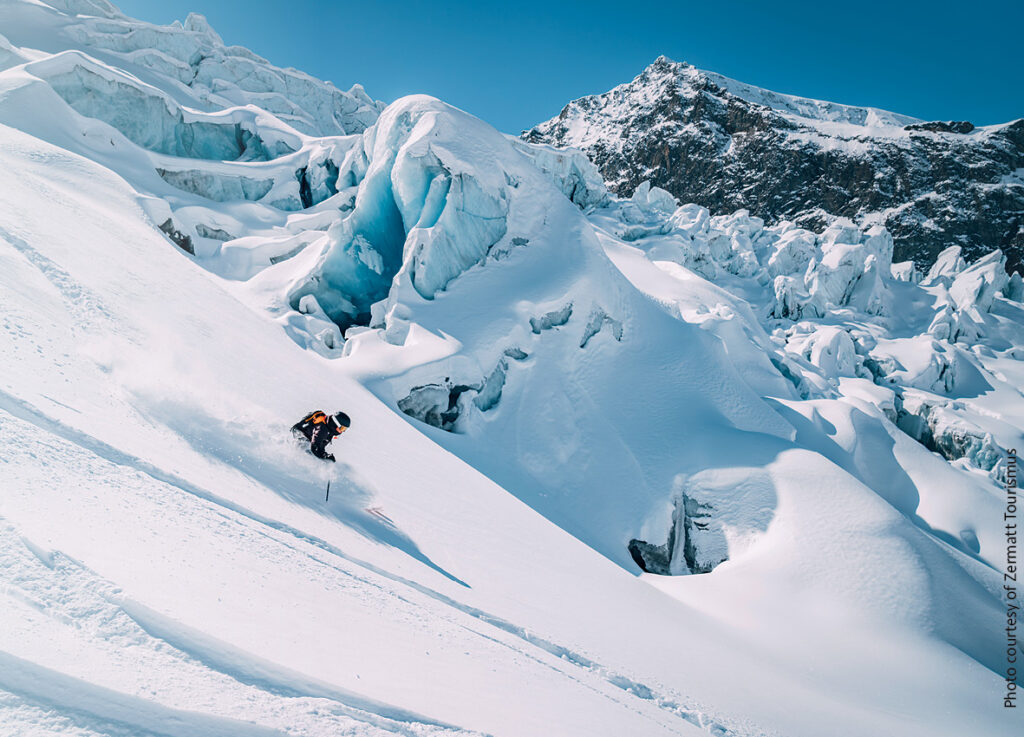
Plan Chécrouit offers a mix of blue and red pistes, while Val Veny has longer descents beneath the Mont Blanc massif. More advanced skiers can explore the steeper upper terrain, with freeride access in the Youla and Arp areas where conditions and expertise permit.
Not every mountain experience requires skis. Snowshoeing in Val Ferret offers a peaceful alternative, and the Skyway Monte Bianco cable car climbs to Punta Helbronner at 3,466 metres for spectacular high-altitude views. In town, Pestana Le Massif provides services for skiing guests, while Michelin-starred Caffè Nazionale in nearby Aosta offers a creative take on Alpine cuisine.
6. Monterosa: freeride terrain and Walser villages
Monterosa stretches across the Ayas, Gressoney, and Valsesia valleys, linking mountain villages and skiing areas on both sides of the range. Alagna, on the Valsesia side, has a strong freeride reputation thanks to its steep and demanding high-mountain terrain.
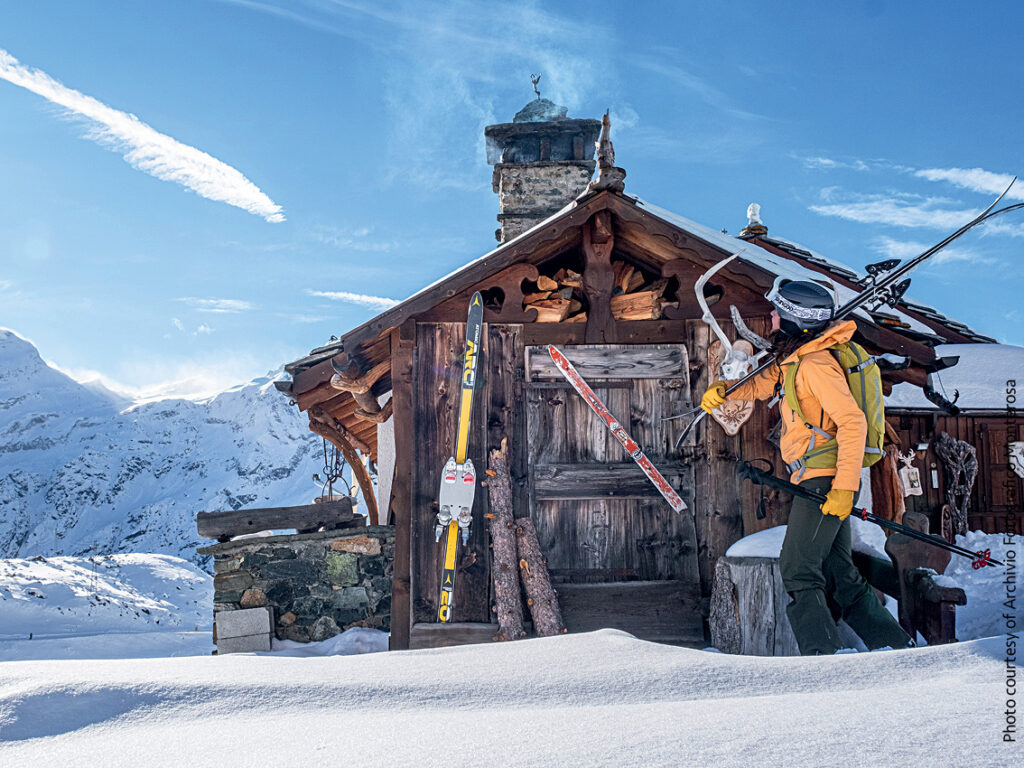
Among the marked runs, the black Olen piste descends from Passo dei Salati to Pianalunga over nearly 3.8 kilometres, with around 900 metres of vertical drop. Skiers looking for something easier can consider the blue Cimalegna and Bodwitch pistes.
The villages of Alagna Valsesia and Gressoney-Saint-Jean preserve Walser heritage, visible in traditional timber houses on stone foundations. For a comfortable base, Aethos Monterosa near the Champoluc and Frachey lift access points combines a spa, outdoor pool, and Alpine dining.
7. Megève: Savoyard charm in the French Alps
Across the border in France, Megève is known for its cobbled streets, timber chalets, and lively village centre. Its development as a fashionable mountain retreat began in the 1920s, and it remains an appealing destination for travellers who enjoy skiing alongside village life and fine dining.
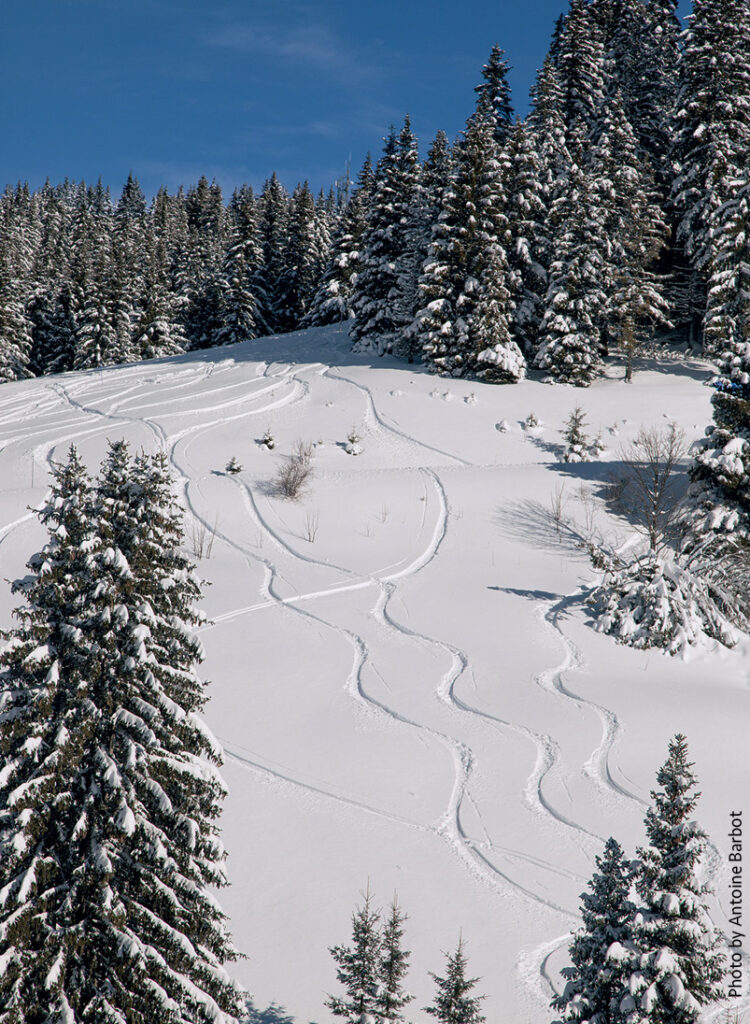
Rochebrune offers tree-lined runs, while Côte 2000 has more open terrain and the longer Géant piste. Intermediate skiers can explore the Mont d’Arbois area, including Lanches d’Arbois and Mandarines.
After a day on the slopes, enjoy Savoyard specialities such as cheese fondue. Zannier Le Chalet offers an intimate mountain retreat, while Four Seasons Resort Megève combines a spa with dining options on the slopes of Mont d’Arbois.
8. Via Lattea: cross-border skiing between Italy and France
Via Lattea, or the Milky Way, is a large interconnected ski area spanning Italy’s Piedmont region and neighbouring France. Its resorts include Sestriere, Sauze d’Oulx, Sansicario, Cesana Torinese, Claviere, and Montgenèvre.
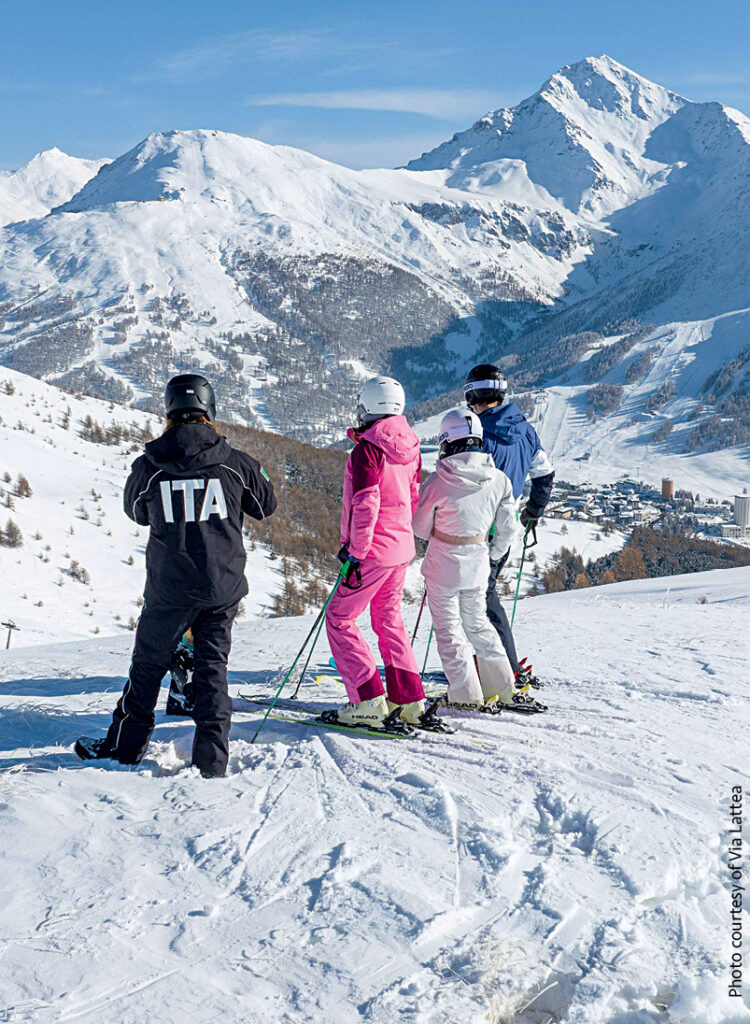
Sestriere, which hosted events during the 2006 Winter Olympics, offers high-altitude skiing around Monte Motta and evening skiing on the floodlit Kandahar piste. Sauze d’Oulx is particularly appealing to confident intermediate skiers, with red runs winding through the trees. Depending on lift operations and conditions, visitors can also ski across the border towards Montgenèvre.
Make time for a mountain rifugio between runs. The area is a great place to try Piedmontese cooking, from warming regional dishes to Fassona beef tartare. Grange Tachier in Sauze d’Oulx is one option for a traditional meal in a rustic setting.
How to choose the best Alpine ski resort for your trip
If challenging skiing is the priority, consider Bormio’s Stelvio, Kronplatz’s Black Five runs, or the freeride terrain around Monterosa. For a broad choice of pistes and the chance to explore several linked resorts, Madonna di Campiglio and Via Lattea stand out. Cervinia and Zermatt are especially memorable for their Matterhorn setting, while Courmayeur pairs skiing with close-up views of Mont Blanc.
Travellers looking for more than skiing will find plenty to enjoy too. Bormio is known for thermal baths, Kronplatz combines sport with mountain museums and exceptional dining, and Megève is ideal for a traditional Alpine village experience.
Travelling with skis or a snowboard on airBaltic flights
Planning to bring your own skis or snowboard? airBaltic accepts both as sports equipment, which must be transported as oversized baggage and added to your booking in advance. You can usually arrange this online if all flights in your itinerary are operated by airBaltic. Otherwise, you may need to contact the airBaltic call centre.
A ski equipment set can include one pair of skis, ski boots, a helmet, and ski poles, packed in up to two ski equipment bags. A snowboard set can include one snowboard, snowboard boots, and a helmet, also packed in up to two bags. The standard weight allowance is 23 kg per set, with a maximum permitted weight of 32 kg.
As space for sports equipment is limited on each flight, it’s best to arrange transportation before travelling. Make sure your equipment is securely packed and check the latest restrictions and booking options on the airBaltic sports equipment page.
Plan your Alpine ski holiday with airBaltic
Whether you’re drawn to the slopes of the Italian Alps, the mountain villages of Switzerland, or the ski resorts of France, there’s plenty to discover. Before setting off, check transfer options, lift passes, and snow conditions to make the most of your time in the mountains. With airBaltic flights to Milan and Turin from Riga, Vilnius, and Tallinn, some of Europe’s most beautiful ski resorts are within easy reach.
Words by David Palacios Rubio
Read more travel stories in Baltic Outlook magazine.