Do you think that the meals served on board are chosen at random, whatever the caterer happened to have in stock that month? Not at all. Every dish is tasted, evaluated, and adjusted long before it reaches an aircraft, and the reasoning owes as much to physics as it does to cooking.
How a menu gets built for a cabin where nothing tastes quite like it does on the ground.
It begins with your own palate, which stops behaving normally the moment the cabin pressurises. Reduced pressure and lower humidity can dull our ability to perceive taste by around 30%, a figure confirmed by research at the Fraunhofer Institute for Building Physics in Germany, carried out inside a decommissioned fuselage rigged to mimic conditions on board. Sweetness becomes less pronounced, while salty notes hold their ground rather better.
The effect is often compared to eating with a head cold. Noise plays a part as well, and a study at Cornell University found that the steady hum of the engines further mutes sweetness while lifting savoury umami notes. A dish that sings in a test kitchen can therefore fall flat at 10,000 metres, and the Fraunhofer tastings showed that desserts sometimes need up to a fifth more sugar before they register at all.
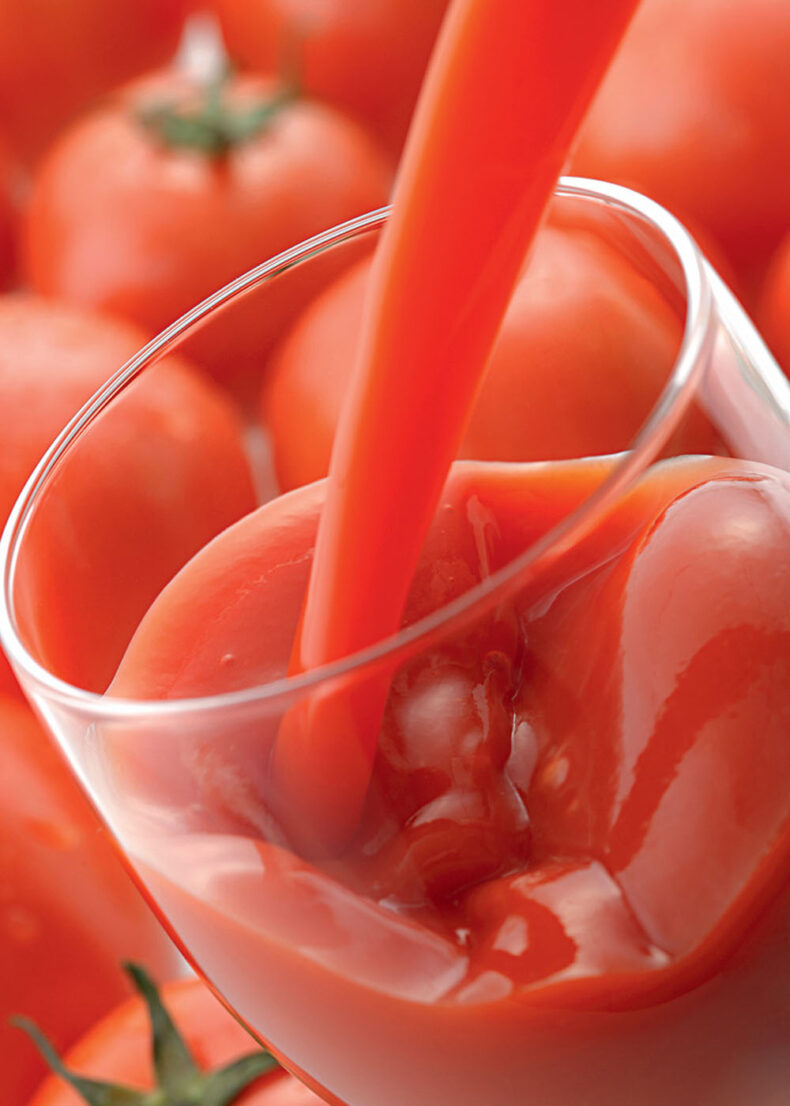
This also answers the tomato juice question. Savoury flavours survive altitude while sweet ones fade, so a drink most people rarely reach for on the ground becomes one of the most requested in the sky.
When airBaltic builds a menu, all of this is weighed alongside product quality and flavour. Dishes are tasted and assessed before they enter service, with particular attention paid to how flavours shift in the air. Ingredients are combined so the overall experience never turns too mild, while spices and sauces are chosen for their more pronounced notes. The meal’s own journey counts, too. Because it’s cooked before departure, transported to the aircraft, and then reheated on board, recipes are adapted to hold their quality along the way.
Why familiar flavours still matter
Passenger psychology matters just as much. For many people, flying carries a degree of stress, and stressed-out passengers reach for what they recognise, which is why the menu pairs familiar flavours with a contemporary interpretation.
A few myths deserve retiring, too. Not all airline food is frozen and microwaved. Some meals are freshly prepared on the ground shortly before the flight and finished in convection ovens on board. The crew are not helping themselves to your tray, either, as they have their own designated meals loaded separately. And although no aviation law requires it, airlines across the industry follow the practice of the two pilots never eating the same dish, a precaution born of a handful of food poisoning cases decades ago.
How airBaltic creates meals that work at altitude
Special dietary needs are catered for with particular care, and nobody goes hungry on an airBaltic flight. The range runs from balanced-diet meals, including low-fat and low-salt versions, through bland, gluten intolerant, lactose intolerant, and raw vegetarian options, all the way to Hindu vegetarian, kosher, and a fruit platter. Some of these are prepared in a separate kitchen area with dedicated appliances to keep them safely apart from other ingredients. Economy passengers simply pre-order their meals in advance, while Business Class passengers can specify their dietary requirements at least 48 hours before departure.
The airline meal has come a long way since the first food served on an airplane: a hamper of sandwiches and fruit handed round a 1919 flight from London to Paris for three shillings. Somewhere between that wicker basket and your teriyaki salmon sits a century of people working out exactly what tastes good in the sky. Now that you know what happens behind the scenes, don’t miss the opportunity to discover the meals airBaltic has prepared just for you.