Tallinn is best understood through its contrasts. Within a compact footprint, Estonia’s capital blends medieval Old Town streets, a UNESCO World Heritage Site, with pastel Baroque parks, Soviet-era architecture and a new wave of repurposed industrial districts that have become some of Northern Europe’s most exciting creative hubs. For travellers on a city break in Tallinn, it feels less like a single destination and more like a collection of overlapping neighbourhoods, each revealing a different layer of the city’s history, architecture and culture.
- Kadriorg district: Baroque elegance, royal gardens and museum culture
- Telliskivi Creative City: street art, galleries and creative regeneration
- Kalamaja to Noblessner: from wooden houses to waterfront life
- Pirita district: Olympic legacy and coastal landscapes
To explore Tallinn is to move through time as much as space. A short tram ride from Tallinn Airport or the city centre can shift you from medieval silhouettes and cobbled streets to minimalist Nordic bakeries, from quiet residential districts to lively creative quarters filled with street art, design studios and waterfront cafés. It is this density of experiences – historic, cultural and architectural – that makes Tallinn one of Europe’s most compelling short-haul city breaks, especially for travellers drawn to Nordic design, food culture and urban regeneration.
Whether you come for its UNESCO-listed Old Town, its emerging Baltic Sea waterfront districts like Noblessner and Pirita, or its thriving creative scene in areas such as Telliskivi Creative City and Kalamaja, Tallinn rewards curiosity at every turn. Every neighbourhood adds another piece to a city that is still evolving, still reimagining itself, and still quietly redefining what a modern Baltic capital can be for visitors arriving on flights from across Europe.
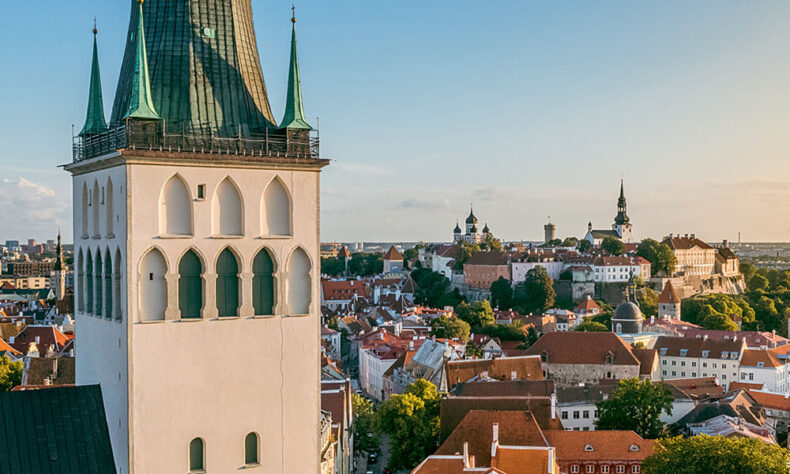
Kadriorg district: Baroque elegance, royal gardens and museum culture
As I follow the chronology of Tallinn’s evolution, my first stop is the verdant Kadriorg district. Translating as “Catherine’s valley”, it was here that Peter the Great commissioned a Baroque-style palace in 1718 as a summer residence for his wife, Catherine.
Today the palace houses the Kadriorg Art Museum and is surrounded by a perfectly manicured garden with flowerbeds in full bloom and yet another art-related landmark, the modernist Kumu Art Museum, at its edge. The easiest way to get there is to hop on one of the charming blue retro-fitted trams, each named after a figure in Estonian history, such as the conductor Neeme Järvi.
Instead, I continue on to Balti Jaam Market. Established in a former warehouse beside the main railway station in 1993, it went through a renovation and reopened in 2017. While gaining new timber additions, what hasn’t changed is the original brick façade and the abundant bounty of nature displayed in the stalls: strawberries, mountains of tomatoes and cucumbers, pickles, preserves, and much more. Among the independent vendors is Biit Me Record Store, a mandatory pit stop for any vinyl-head and a great place to explore homegrown talent. Also inside the market hall are street-food stalls serving everything from hand-pulled noodles to hot dogs, making it a favourite destination for a quick lunch.
The specialty coffee and sourdough bakery boom that has swept Europe has not bypassed the Estonian capital – I’m stunned by the sheer number of new addresses since my last visit. On my way to the Telliskivi area, I slip into Karjase Sai, a stunningly minimalist Nordic-style bakery where the famed cinnamon buns sit next to Danish bolle med ost (soft buns split with a slice of cheese), in this case from the Kolotsi farm in southern Estonia. Is this a nod to the Danish influence in the city? Tallinn’s name is said to derive from Taani linn, or ‘Danish town’, referring to King Valdemar II of Denmark’s victory over the locals in 1219 and construction of a stone castle on Toompea Hill.
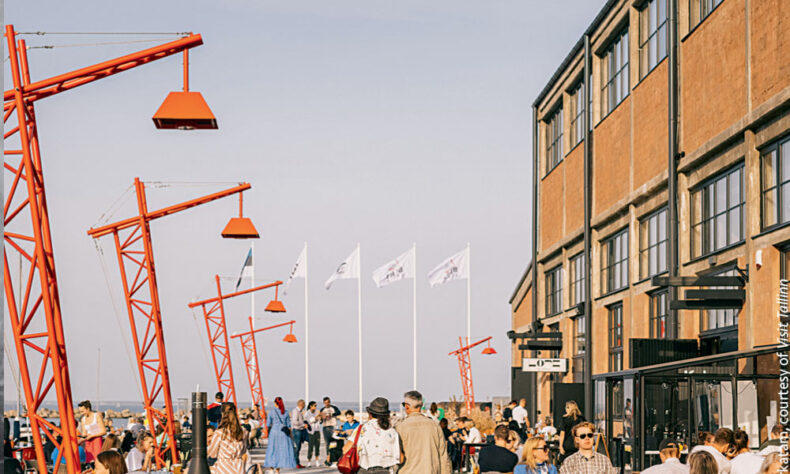
Telliskivi Creative City: Street Art, Galerien und kreative Stadterneuerung
Telliskivi Creative City is where the rebirth of Tallinn began, setting up a model the rest of the city followed. Ten brick halls of the former Baltic Railway workshops, once the city’s largest employer and the Soviet-era assembler of semiconductor components for Lunokhod (the first lunar rover), were renovated in 2007 and now host roughly 300 businesses, two theatres, and seven galleries. Such creative districts tend to lose momentum after a few years, but this mural-clad area still appears to be alive and kicking almost two decades later.
Telliskivi gained more energy with the arrival of Fotografiska in 2019, which became the first international outpost of the legendary Swedish museum network dedicated to photographic art. Besides the exhibits of work by renowned as well as up and-coming photographers, another reason to visit the museum is the café and shop on the airy ground floor and the rooftop bar and sustainability-minded restaurant with sweeping views over Tallinn’s Old Town.
Not being able to resist the pleasures of a high-quality museum shop, here I bump into 24-year-old Arina Vastitskaya, a photographer and sommelier who returned to Tallinn after a sojourn in Los Angeles. I use the opportunity to gain a young person’s view of the Estonian capital, and Vastitskaya describes Tallinn as a small city with grand opportunities – it’s full of museums, galleries, festivals, and events, and it’s easy to make connections happen.
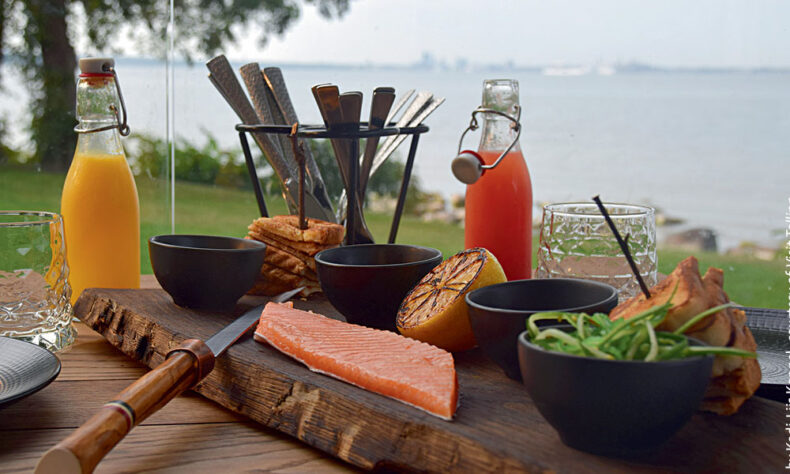
We stop by the Telliskivi 60a building, where Leivabaar resides among ceramics workshops and florists. The bread bar (in Estonian, leib/leiva refers to rye bread) is run by the Aarde Pagar bakers, who specialise in traditional dark loaves. The aim of the bakers is to combine the best qualities of globally fashionable artisan sourdough with traditional Nordic dark bread. Leivabaar serves breakfast and ten-course wood-fired dinners in an omakase-style setting built around bread and seasonal local produce. Rye has been cultivated in Estonia for over a thousand years, and rye bread still is an integral part of the local diet.
Kalamaja to Noblessner: from wooden houses to waterfront life
The two- and three-storey wooden houses of Kalamaja, many adorned with flower boxes and pretty gardens, give the neighbourhood a small-town feel. It’s located just across the street from edgy Telliskivi, but here a completely different picture unfolds.
The neighbourhood’s name, which translates to ‘fish house’, derives from the 14th-century fishermen’s settlements in this area. But its distinctive architecture came later, when the late-19th-century rail link to Saint Petersburg pulled factories and workers into this corner of the city. Today these wooden edifices are some of the most coveted real estate in the city, and they provide a quaint backdrop for a stroll.
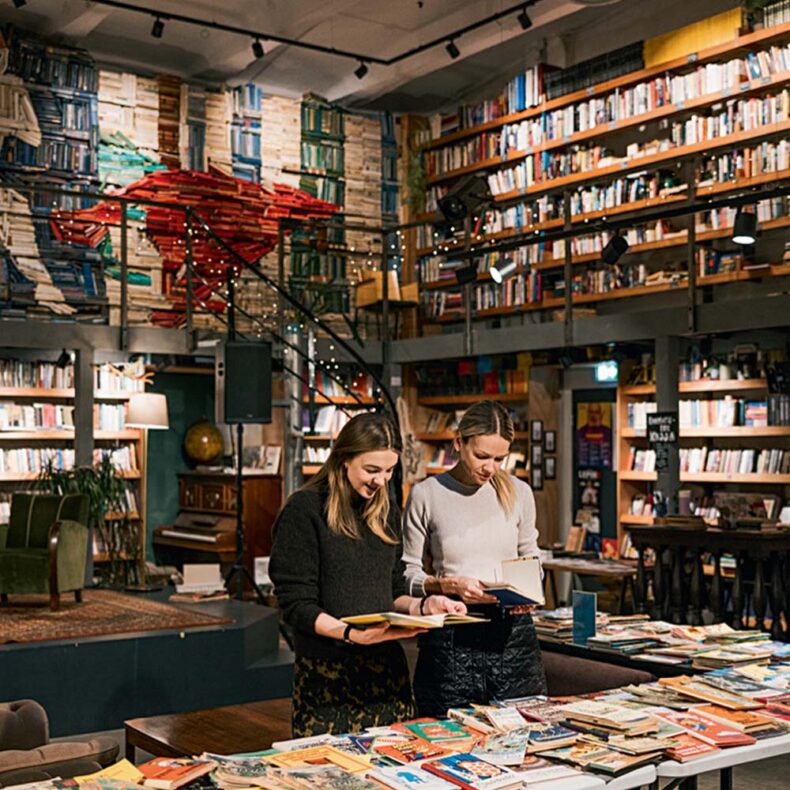
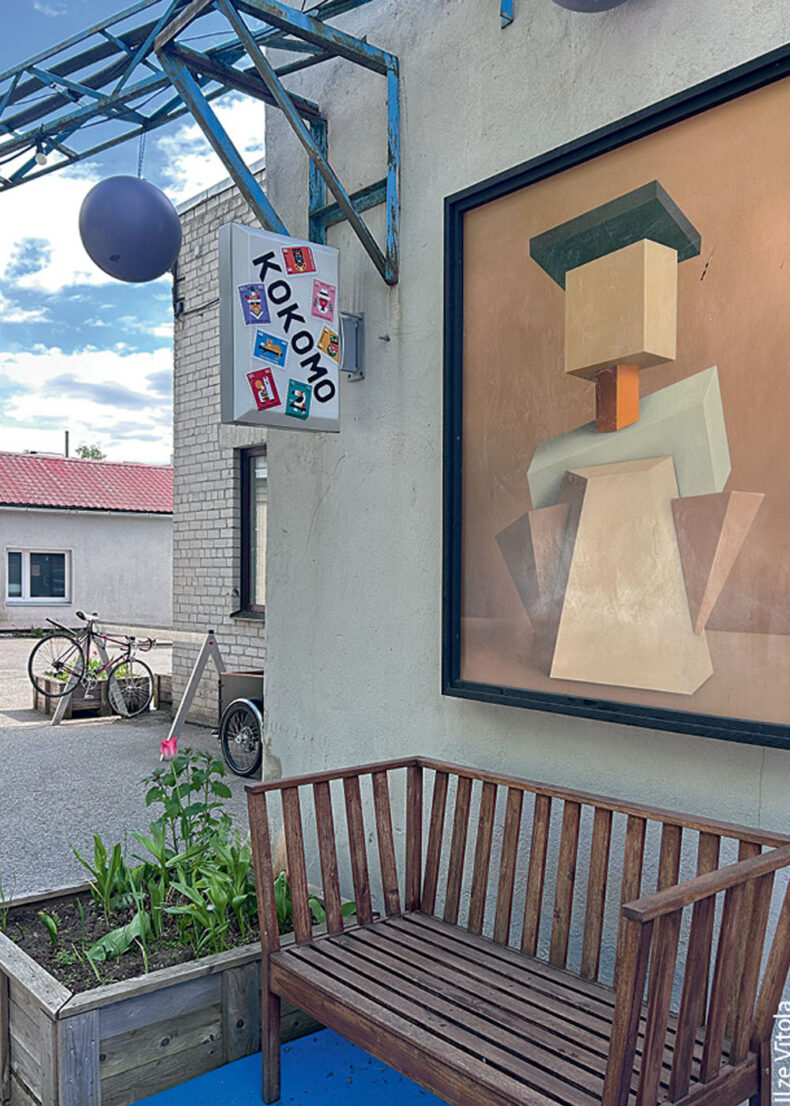
Further west lies the newest creative hub in Tallinn – Põhjala Factory. The Estonian Rubber Factory opened here in 1924, turning out wellies, raincoats, and hoses. Later nationalised by the Soviets and renamed Põhjala, it employed some 700 people at its peak before closing in 1998. The 15-hectare site sat dormant until 2018, when it gradually began to transform into what’s now the place to meet the city’s creative movers and shakers. Where machines once filled the hangars, a different kind of buzz now fills the air: jewellery artists, painters, animation studios, textile designers, coffee roasters, and so on.
At Põhjala Factory, people potter around the community garden, and an event is being set up at the leafy Botik bar. Students quietly click away at their laptops at REaD, the second hand bookstore on the balcony floor. Its floor-to-ceiling shelves part to reveal a colour-coded mural/installation illustrating a scene inspired by Clarissa Pinkola Estés’ Women Who Run with the Wolves. REaD is the bookshop-cum-café you wish you had around the corner, the kind in which you feel you could write a bestseller or a successful business plan.
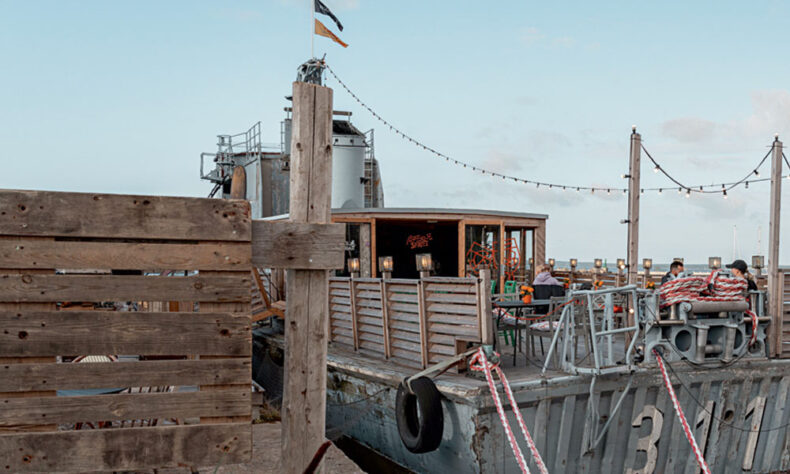
But before heading back to the city centre, make one more stop: Noblessner. When I last visited Tallinn, in 2020, this former submarine shipyard had only just been unveiled to the public; the first phase of its redevelopment had wrapped up the previous year. Founded in 1912 by Emanuel Nobel (Alfred’s nephew) and Arthur Lessner to serve the Russian Empire, the yard remained closed to civilians until the last ship was assembled in 2018. The redesign, which won the 2020 Baltic Real Estate Award for urban regeneration, pairs the original limestone industrial shells with sleek contemporary additions. Among the many residents, highlights include the Kai Art Centre, the Proto Invention Factory, and the Põhjala Brewery taproom.
During the golden hour, the atmosphere is especially magical, and you’ll be competing for a spot, particularly at weekends. One of the most sought-after places at sunset is Pier No. 44, where a rusty minesweeper has been reborn as Wambola Surf & Bar. On Wednesdays and Thursdays, Wambola hosts live performances. There’s a skate ramp, a street-food stall, and a sauna with a sweeping view over the bay. Estonians have been steaming in smoke saunas, or suitsusaun, for at least 700 years. Locals engage in the tradition, inscribed on UNESCO’s intangible heritage list in 2014, not only to warm up and rejuvenate but also to think things through.
Pirita district: Olympic legacy and coastal landscapes
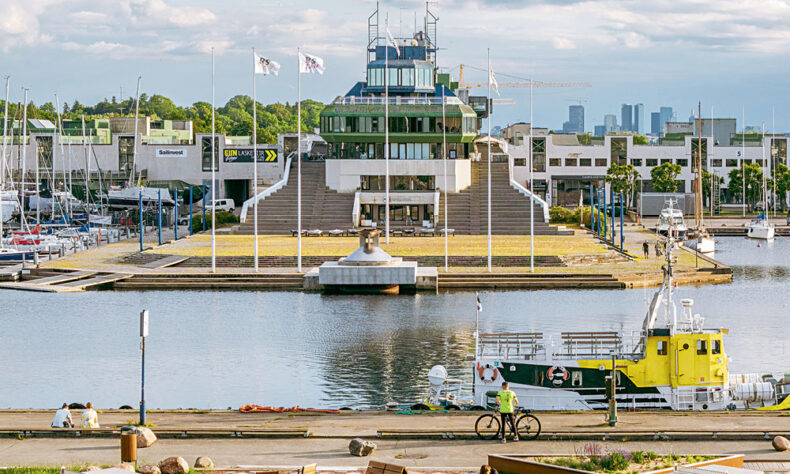
Ambition and decay sit side by side in the Pirita district. Its current form was shaped by the 1980 Summer Olympic Games, when Moscow, having no coastline of its own, offloaded the sailing regatta onto Tallinn. The Olympic Yachting Centre, Hotel Olümpia, and the TV Tower went up in a single push. Some of that legacy is loved – the Yachting Centre is now the Pirita Marina Hotel & Spa – while other parts of it have been left to fall apart. For example, the Pirita Promenade has begged for a renovation for years.
The most striking remnant of the Olympic Games, however, is Linnahall, the vast terraced concrete amphitheatre across town, close to the harbour. It has stood empty since 2010, but in September 2026 it will serve as the main venue of the Tallinn Architecture Biennale (TAB). The 8th edition of the Biennale will revolve around the question ‘How much?’, assessing what architecture really costs and how constraint can open new perspectives.
Long abandoned yet continuously debated, Linnahall embodies the Biennale’s central theme: reconstruction is considered too expensive, demolition equally so, while postponement steadily accumulates further material and cost. Linnahall is currently accessible only by guided tour, so its opening during TAB is a rare invitation.
On what sets Tallinn apart architecturally, Mira Samonig, one of this year’s curators, explains: ‘What is remarkable is the richness of architectural histories in close proximity. Gothic spires twin with socialist towers; vernacular wooden typologies such as the Tallinna maja and Lenderi maja sit next to their contemporary interpretations; 1960s brick and concrete apartment blocks share the skyline with repurposed industrial complexes and new glass towers.’ Asked about future developments, one project she recommends keeping on our radar is Loodusmaja, which is set to open in Noblessner in 2027. It’s a 14,000-square-metre nature centre that will be the largest wooden building in Estonia, and one of the largest in Europe.
My taxi back to the city passes the Pirita Promenade, which is lit up by a pink-hued sunset. This is the magic of Nordic summers, when the light barely fades from the horizon. A couple sits on top of one of the promenade’s dilapidated concrete crumbs – it’s possibly the most romantic thing I’ve ever seen. This is the moment I tell you that, with full main-character energy, I stop the taxi, jump out, and run to enjoy the view. But truth be told, I have only 5% phone battery left and decide to play it safe, heading back to the hotel. So I leave you with a gentle reminder to charge your phone, because in Tallinn – this tech savvy, coastal, medieval fairytale of a city – you will surely need it.
Read more about Tallinn in Baltic Outlook.
Text by Ilze Vītola