Your best travel companion? You!
Solo travel is one of those things that sounds a little intimidating until you actually try it. Then suddenly you realise how nice it is to make every tiny decision yourself. No group chat negotiations, no waiting for someone to get ready, no pretending you are excited about a plan you secretly want to escape from.
Travelling alone means the day is completely yours. Sleep in and call it slow travel. Eat burgers for breakfast because no one is there to question your life choices. Spend three hours in one museum room, take a random tram to the end of the line, or sit outside a café and people-watch like it is a serious cultural activity.
And the best part? Solo travel does not mean being lonely. It often makes it easier to notice the place around you, talk to people, follow your curiosity, and find out what kind of traveller you are when nobody else is shaping the trip. You get to be selfish in the best possible way – with your time, your energy, and your plans.
So whether you are ready for your first solo city break or just looking for a new place where you can wander around on your own terms, these destinations are a good place to start.
Here are some of the best places for solo travellers, plus a few practical tips to make the trip easier
Where to get started
Solo travel is not about becoming a fearless explorer overnight. It is more about learning how to enjoy your own company while making smart choices along the way. The best solo trips usually have a nice balance: enough planning to feel safe, enough flexibility to still feel free.
Before you pack your bag and start imagining yourself dramatically walking through a new city with coffee in hand, sort out a few basics. They will not make your trip less spontaneous. They will simply make it easier to relax, enjoy the place, and say yes to the good ideas that appear along the way.
Safety first
Pick a destination that matches your comfort level, not someone else’s idea of adventure. For your first solo trip, that might mean a city with good public transport, clear airport connections, walkable neighbourhoods, plenty of accommodation options, and a general feeling that you can figure things out without stress.
That does not mean the destination has to be boring or overly predictable. Amsterdam, Berlin, Rome, and Split all have enough going on to keep you busy, but they are also manageable choices for solo travellers. You can blend city life, culture, food, history, beaches, nightlife, or slow wandering depending on your mood.
Before leaving, take care of the practical safety net. Get travel insurance, save copies of your passport and booking confirmations online, check how to get from the airport to your accommodation, and look up the local emergency number. Also check the neighbourhood where you are staying – not just whether the hotel looks nice, but how easy it is to get back there in the evening.
A good rule: make sure future-you is not annoyed with past-you. Future-you arriving late at night with 4% battery will be very grateful that past-you saved the hotel address offline.
Create a simple route
A solo travel route does not need to look like a school timetable. In fact, it probably should not. Leave space for random cafés, unexpected viewpoints, second breakfasts, and the kind of small detours that often become the best part of the trip.
Still, it is useful to have a simple structure. Write down where you are staying, how you are getting there, which areas you plan to visit, and any key bookings such as flights, trains, museums, tours, or day trips. Keep everything in one place, whether that is a notes app, a shared document, a travel app, or screenshots saved in a folder.
Then share the basic version with someone you trust. They do not need a minute-by-minute report of your holiday, but they should know where you are staying and when you are moving from one place to another. It makes things easier for them, and it gives you a backup layer of common sense.
And yes, solo travel means changing your mind whenever you want. If you suddenly decide to skip a museum and spend the afternoon by the water instead, that is part of the point. Just send a quick update if your plans change significantly, especially if you are changing cities, accommodation, or expected arrival times.
Think of it less as “reporting to someone” and more as leaving a breadcrumb trail. You are still the main character of the trip – just a main character with decent logistics.
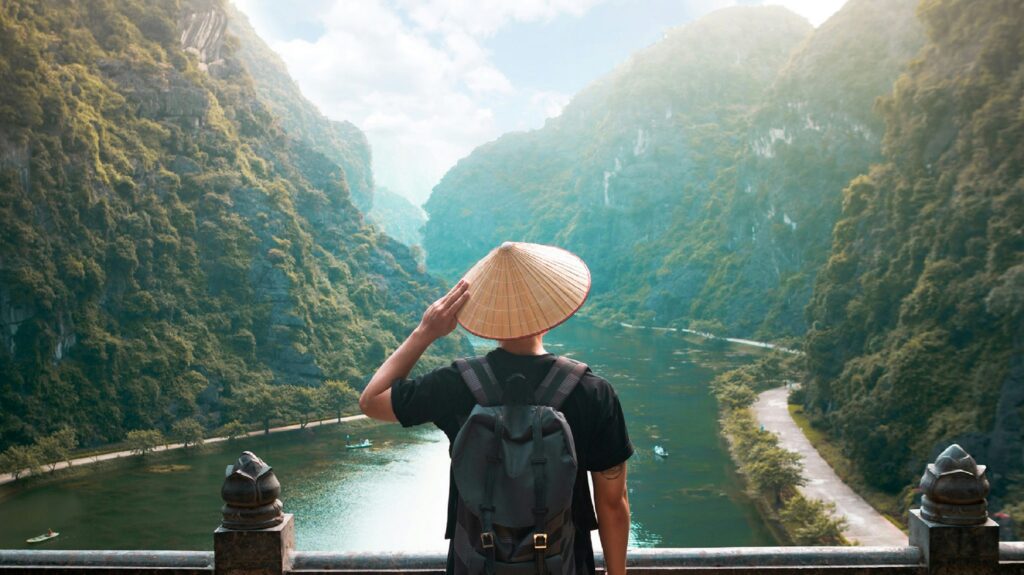
Use the advances in technology
Solo travel today is a lot easier than it used to be, mostly because your phone can quietly do half the boring work for you. Use it well. Maps, translation apps, public transport planners, airline apps, digital boarding passes, hotel booking apps, weather forecasts, restaurant reviews, museum tickets, taxi apps – all of these can make a solo trip feel much smoother.
Before you leave, download offline maps for your destination and save the address of your accommodation. Check which transport app locals use, whether card payments are widely accepted, and if you need any tickets or reservations in advance. It is also a good idea to pin a few useful places: your hotel, the airport or train station, a supermarket, a pharmacy, and a couple of cafés near where you are staying.
And then there is the most important travel rule of the modern age: do not let your phone die at the worst possible moment. Charge your device before heading out, pack a power bank, and keep your charger somewhere easy to reach. A phone with 3% battery, no map, and a vague memory of your hotel name is not a personality-building experience anyone needs.
Technology should not control the whole trip, but it can give you the confidence to wander more freely. When you know you can find your way back, translate a menu, check the last metro, or book a ride if needed, the city becomes much easier to enjoy.
Enjoy the adventure
Travelling solo can feel like a big step, especially the first time. There may be moments when it feels slightly awkward, uncertain, or completely different from travelling with friends or family. But that is also what makes it exciting. You are not just visiting a new place – you are learning how you move through the world when the decisions are fully yours.
Solo travel gives you the chance to test your confidence in small, practical ways. Ordering dinner alone. Finding your way through a new city. Changing plans without asking anyone. Spending a whole afternoon doing exactly what interests you. These things may sound simple, but together they can make you feel more capable, independent, and open to new experiences.
Many travellers come back from solo trips with more than photos and souvenirs. They return with clearer thoughts, better confidence, and a stronger sense of what they enjoy. Sometimes the best part of a solo trip is not the landmark you visited, but the moment you realise you are completely fine on your own – maybe even better than fine.
So perhaps this is the year to try it. Start with a city that feels exciting but manageable, book the flight, pack light, keep your phone charged, and give yourself permission to travel exactly the way you want.
Amsterdam, the Netherlands
Amsterdam is one of those cities that makes solo travel feel almost effortless. It is beautiful without being too polished, busy without being overwhelming, and easy to explore without needing a strict plan. Give yourself a couple of days here and you can fill them with canals, museums, vintage shops, flower stalls, cosy cafés, curious little museums, and long walks that somehow always lead to another photogenic bridge.
The best way to experience Amsterdam is to keep moving. Walk, rent a bike, hop on a tram, or simply follow the canals until you lose track of time. Taxis are rarely necessary in the city centre, and honestly, they would take away half the charm. Amsterdam is made for slow exploring, especially if you are travelling alone and can stop whenever something catches your attention.
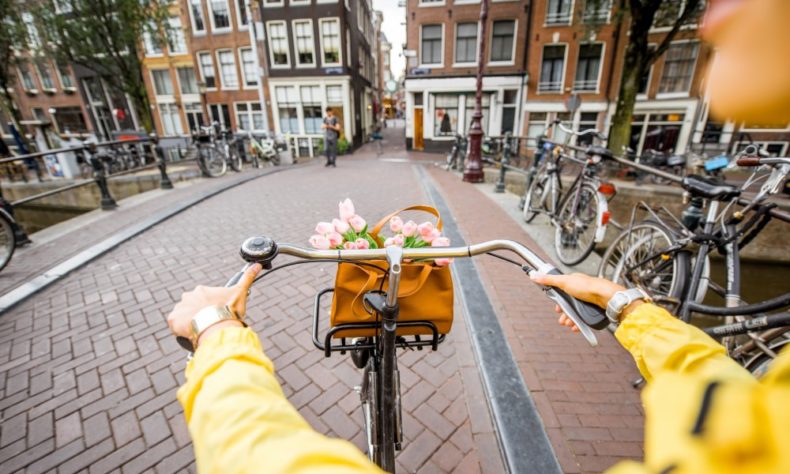
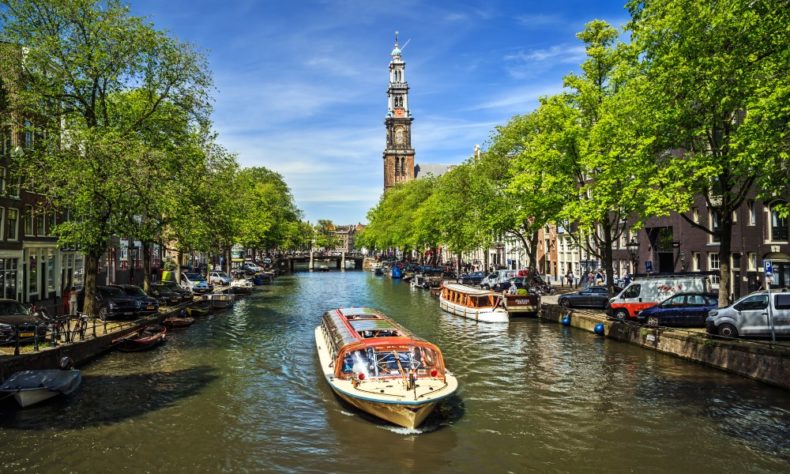
The city’s famous canal belt dates back to the 17th century, and it is one of the reasons Amsterdam is often called the Venice of the North. The three main canals – Herengracht, Prinsengracht, and Keizersgracht – curve around the centre like elegant rings, giving the city its unmistakable shape. For a first solo walk, start somewhere near the Jordaan neighbourhood, cross a few bridges, look into the small independent shops, and let the city do the planning for you.
For something colourful, head to the floating flower market on the Singel canal. It has been around since the 19th century and is a classic Amsterdam stop, especially if you want to browse tulip bulbs, souvenirs, and bright displays without committing to a full museum-level activity. Go earlier in the day if you want a calmer visit, then grab a coffee nearby and continue along the canals.
Museum lovers will have no trouble filling a day. The Van Gogh Museum is the obvious choice, and for good reason – it is one of the city’s major highlights, especially if you enjoy impressionism and post-impressionism. But Amsterdam also knows how to be strange in the best way. Those looking for something less traditional can visit the Hash Marihuana & Hemp Museum or the Sex Museum, both of which lean into the city’s open-minded personality.

Photo on Instagram
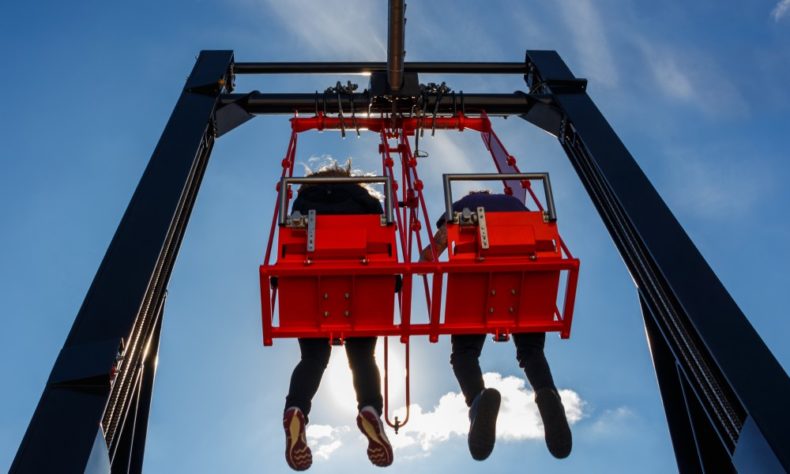
If you want a proper “look, I am in Amsterdam” moment, go up to the A’DAM Tower. The observation deck gives you a wide view over the city, and the famous swing on top is for travellers who like their sightseeing with a small dose of panic. It is not the kind of thing everyone needs to do, but if you want a solo travel story with a little drama, this is a good candidate.
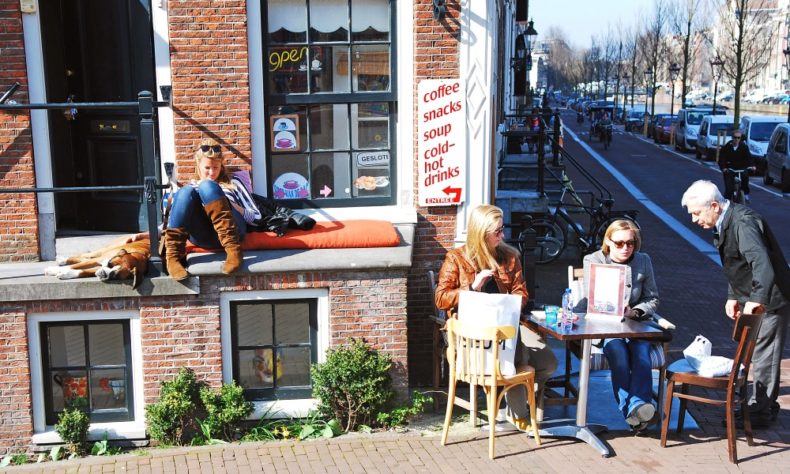
The Jordaan neighbourhood is perfect for a slower morning. It is one of Amsterdam’s most atmospheric areas, with narrow streets, old houses, small galleries, boutiques, brown cafés, and plenty of places where you can sit alone without feeling awkward. Order coffee, add cake, and pretend you are casually living your best local life. Solo travel allows that kind of behaviour.
And if you do start missing company, Amsterdam has a very specific solution: cats. Kattencafé Kopjes is a cosy cat café where several resident cats may decide to join you while you drink coffee. Cat lovers can continue the theme at KattenKabinet, a museum dedicated entirely to cats in art. It sounds like a joke, but it is a real museum, with works and references connected to major artists including Picasso and Rembrandt. Amsterdam does not ask you to explain your interests. It simply gives you a museum for them.
For a small escape from the city, take a short trip to Edam, the town behind the famous cheese. It is close enough for an easy day trip and calm enough to feel like a reset after Amsterdam’s busy streets. Book a cheese tasting in advance, or keep things simple and visit a local market or cheese shop. Sellers will usually let you taste before buying, which is useful because cheese shopping in the Netherlands can become serious surprisingly quickly.
Photo on Instagram
Food in Amsterdam is easy for solo travellers because many of the best things are casual. Try bitterballen – crispy, deep-fried meat snacks usually served with mustard – at a bar with a local beer. For street food, broodje haring is a classic: a herring sandwich with onion and pickled cucumber. It may not sound glamorous, but it is satisfying, local, and exactly the kind of thing you should try at least once.
When it comes to staying social, Amsterdam is one of the easier cities in Europe. Hostels are a good option if you want to meet other travellers, join walking tours, or find people for a canal cruise or evening drinks. If you want something more stylish but still relaxed, Volkshotel is a strong choice, with a rooftop sauna, bar, and a creative atmosphere that works well for solo guests.
For evenings, keep things flexible. Amsterdam has everything from quiet canal-side bars to more industrial, creative spaces where solo travellers can blend in easily. Choose somewhere lively but not too chaotic, sit at the bar, and let the night unfold. The city is ideal for travellers who want freedom, culture, and just enough weirdness to keep the trip interesting.
Amsterdam is easy to explore, hard to leave, and perfect for your first or next solo trip!
Berlin, Germany
Berlin is not the kind of city that tries too hard to charm you. It is cooler than that. It simply opens the door and lets you decide what kind of trip you want to have. History-heavy weekend? Easy. Long museum days? Absolutely. Street food, flea markets, vintage shops, riverside bars, underground clubs, brutalist architecture, elegant restaurants, and strange little galleries? Also yes.
For solo travellers, Berlin is an excellent choice because it does not expect you to behave in one specific way. You can be social, quiet, curious, chaotic, cultural, lazy, or wildly overambitious with your daily step count. Nobody will care. That is part of the appeal.
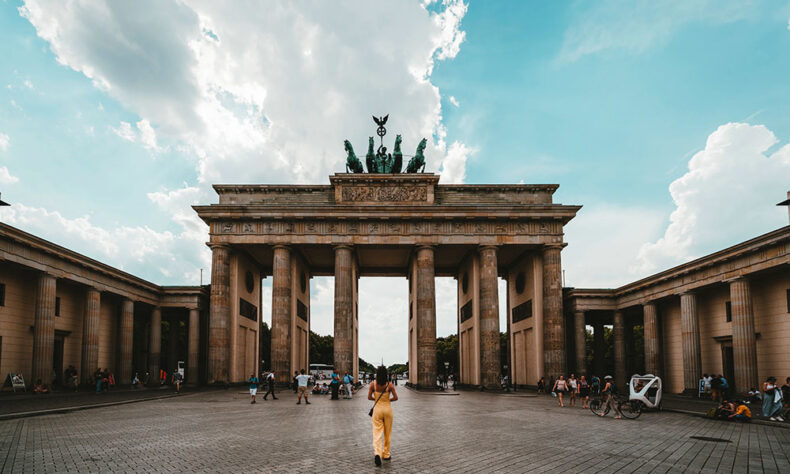
Photo on Unsplash
The city is big, multicultural, and full of contrasts. One moment you are standing in front of the Brandenburg Gate, the next you are eating a late-night kebab, then somehow you end up in a gallery, a techno queue, or a tiny bar where everyone looks like they know a secret you do not. Berlin mixes serious history with creative disorder, and that makes it one of Europe’s most interesting solo city breaks.
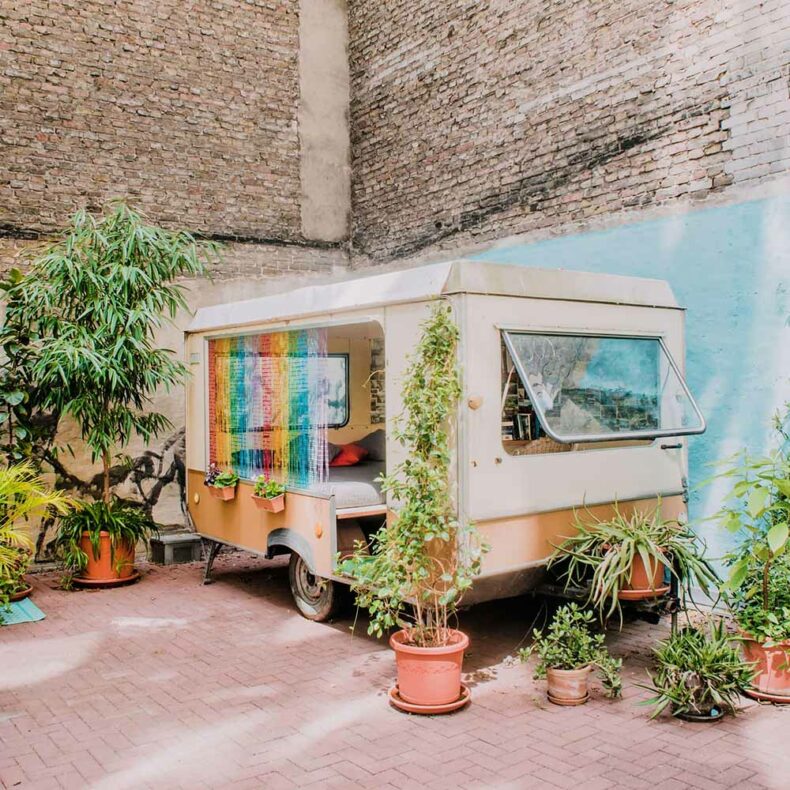
Photo on Instagram
Have you ever stayed at a hostel?
There is always a first time, and Berlin is one of the easiest cities to try the hostel experience. You will find everything here – budget-friendly dorms, design-led hostels, private rooms, social common areas, rooftop bars, quiet corners for remote workers, and places that feel more like boutique hotels than traditional hostels.
The best part is that hostels make solo travel feel much less complicated. You can arrive alone, but still have easy ways to meet people when you feel like it. Ask the receptionist about free walking tours, neighbourhood recommendations, pub crawls, food markets, or events happening that week. Hostel staff usually know the city well, and their tips are often more useful than a generic travel list.
A free walking tour is a good way to start your Berlin trip. It gives you a quick overview of the city, helps you understand the history behind the streets you are walking through, and makes the city feel less intimidating. You will usually visit major sights such as the Brandenburg Gate, the Berlin Wall, Checkpoint Charlie, and the Holocaust Memorial, while also getting stories that make the city feel more real.
Just remember that “free” walking tours are usually tip-based. You do not have to overthink it, but if the guide was good, it is polite to leave a tip at the end. Think of it as paying for a local introduction to the city – one that might also help you meet other travellers for coffee, dinner, or a night out later.
Don’t remember the last time you visited a zoo? Berlin gives you a good reason to change that.
Berlin Zoo is the oldest zoo in Germany, and it feels like a surprisingly charming break from the city’s heavier history, sharp architecture, and late-night energy. It is right in the city, easy to reach, and a good solo stop if you want something lighter between museums, walking tours, and neighbourhood exploring.
One of the biggest reasons to go is the panda family. There is something almost impossible not to like about watching pandas go through their very serious daily business of eating, climbing, rolling around, and generally looking like they have no deadlines at all. It is a calm, slightly absurd, very Berlin kind of detour – and a nice reminder that solo travel does not always have to be about “must-see” landmarks.
Go when you want a slower afternoon, especially if the weather is nice. Walk around at your own pace, take a coffee break, and let it be one of those easy parts of the trip that does not need too much planning.

Berlin’s nightlife has a reputation that reaches far beyond Germany, and it is not exaggerated. This is one of Europe’s great after-dark cities, especially if you like electronic music, low-lit bars, warehouse spaces, outdoor drinking spots, and nights that start much later than expected.
Do not plan your Berlin night like a normal evening out. In many places, things only begin properly after midnight, and the city has no real interest in rushing you. Start with dinner, then a drink somewhere relaxed, then see where the night goes. Berlin is at its best when you leave some space for the unexpected.
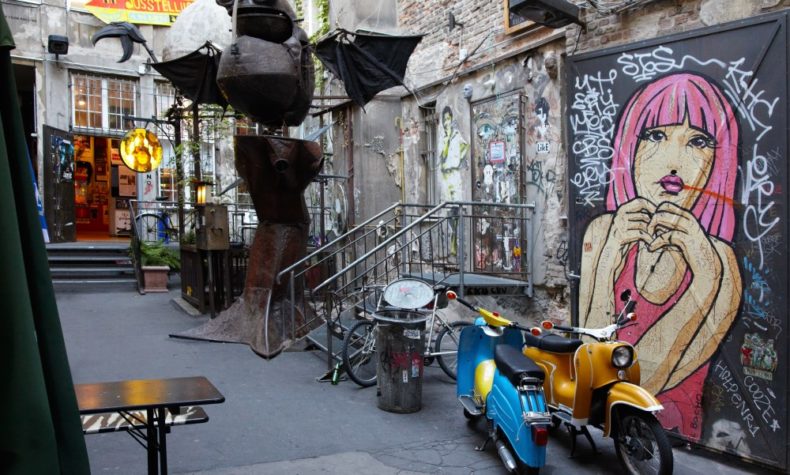
RAW Gelände is a good place to begin. This former industrial complex used to serve railway and tram-related purposes, but today it is full of graffiti-covered buildings, bars, clubs, beer gardens, food stalls, music venues, and alternative spaces. It has exactly the kind of rough-around-the-edges energy that makes Berlin feel like Berlin. You can go there for one drink and accidentally stay for hours.
And then there is Berghain, the city’s most legendary techno club. Calling it a club almost feels too small – for many electronic music fans, it is closer to a techno institution. The sound system, atmosphere, and marathon parties are famous, but so is the door policy. The bouncers are selective, and getting refused entry is common enough to be part of the story.
So if you try your luck and do not get in, do not take it personally. This is Berlin, not a performance review. Have a backup plan, go somewhere else, and keep the night moving. The city has more than enough bars, clubs, and dance floors to turn a rejected queue attempt into a better story anyway.
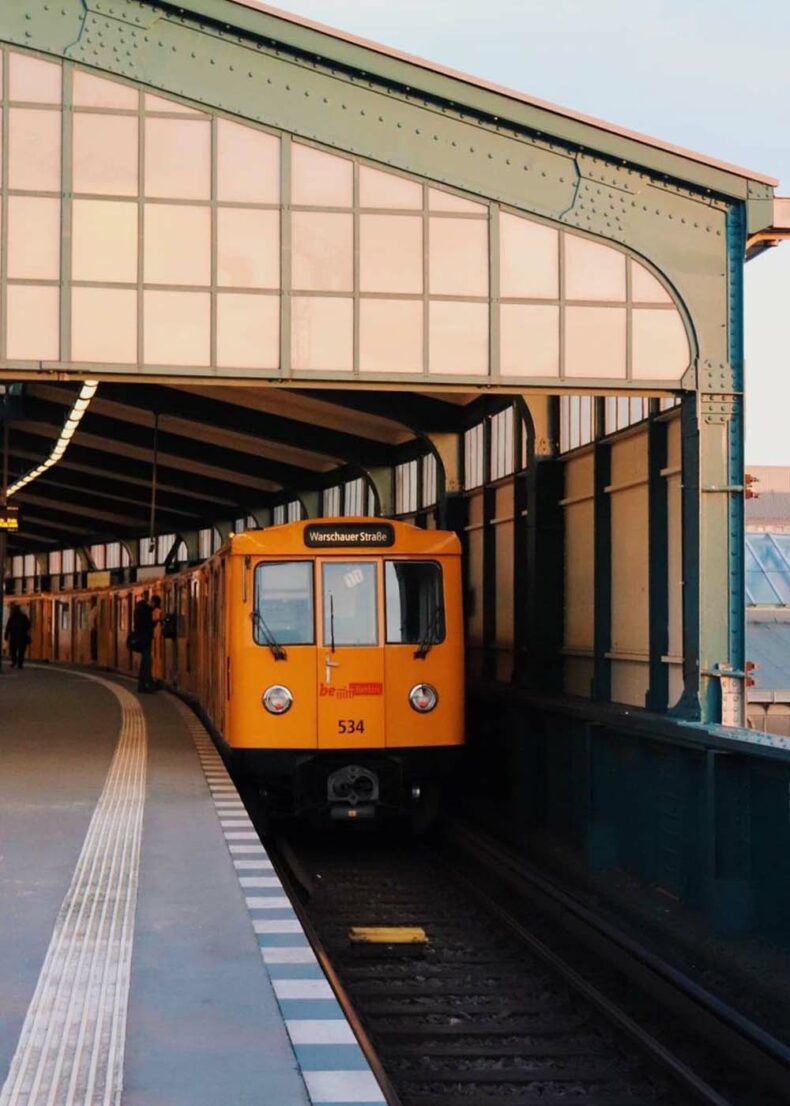
Photo on Instagram
Berlin is big, but it does not take long to figure out how to move around. The public transport system is clear once you understand the basics, with U-Bahn, S-Bahn, trams, and buses connecting the city surprisingly well. After a day or two, you will probably start feeling like you know what you are doing – which is one of the small victories of solo travel.
The city is also very bike-friendly, and cycling is one of the best ways to experience Berlin beyond the obvious tourist route. Rent a bicycle, choose a neighbourhood, and give yourself permission to move slowly. Just make sure to remember exactly where you locked it. Berlin has many corners, many posts, and many bicycles that look suspiciously similar after a long day.
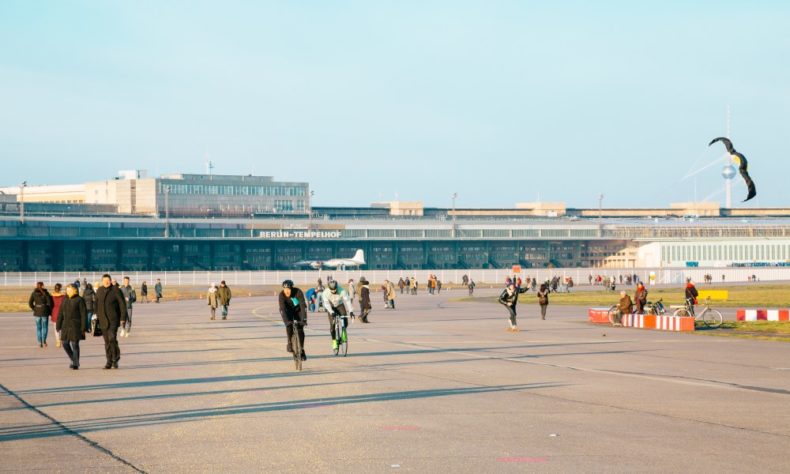
For a ride that feels very Berlin, pedal to Tempelhofer Feld. This former airport has been turned into a huge public park, and instead of planes taking off, you will see people cycling down old runways, skating, jogging, flying kites, walking dogs, sunbathing, drinking beer, reading books, or doing absolutely nothing with impressive commitment.
One corner has become an urban garden, while the rest of the space feels open, relaxed, and slightly surreal. It is not polished or overly designed, and that is exactly why it works. Tempelhofer Feld is the kind of place where you can take a break from sightseeing, sit on the grass, watch Berliners use the city in their own way, and enjoy the rare feeling of having too much sky above you.
What is a traditional Berlin dish? The honest answer is: currywurst, kebabs, beer, and whatever incredible thing you find on the next street corner.
Berlin’s food scene is not built around one neat national stereotype. It is messy, international, practical, creative, and very satisfying. Start with currywurst – sliced sausage covered in curry ketchup, usually served with fries and eaten without too much ceremony. Then move on to the city’s legendary döner kebab, a Berlin classic that proves some of the best travel meals do not need white tablecloths or complicated explanations.
But Berlin does not stop there. The whole world feels packed into one city, so you can eat your way through Turkish bakeries, Vietnamese noodle shops, Syrian restaurants, Korean fried chicken spots, natural wine bars, vegan cafés, food markets, late-night pizza windows, and surprisingly good brunch places. It is the kind of city where solo dining does not feel awkward, because everyone is too busy doing their own thing anyway.
So let your taste buds run free. Try the famous street food, follow the smell of fresh bread, sit at the bar with a beer, order something you cannot pronounce, and leave room for one more snack on the way back to your hotel. Berlin is not a city for strict meal plans – it is a city for edible detours.
Ready to take yourself out for currywurst, club nights, museum days, bike rides, and whatever else Berlin throws at you?
Rome, Italy
Rome may have a reputation as one of Europe’s great romantic destinations, but do not let that fool you. This city is just as good for solo travellers. In fact, Rome might be even better when you can explore it at your own pace, stop for gelato whenever the situation requires it, and spend as long as you want staring at ancient ruins without anyone asking when lunch is.
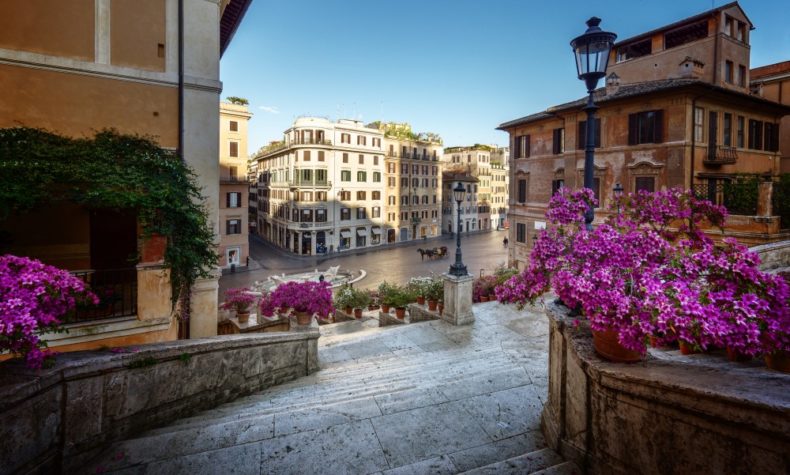
The city is dramatic in the best possible way. One minute you are walking past a quiet side street with laundry hanging from windows, the next you turn a corner and there is a monument that looks like it belongs in a history book. Rome does not hide its past in museums only. It puts it everywhere – in squares, churches, fountains, ruins, staircases, and everyday neighbourhoods where people are still just trying to get through traffic.
For your first day, a guided tour is a smart idea. It helps you understand what you are actually looking at, because Rome can be overwhelming if you try to decode two thousand years of history alone with only a map and good intentions. Group tours are also useful for solo travellers because you will probably not be the only person travelling alone. It is an easy way to meet people without forcing the situation, and you may find someone to join for coffee, dinner, or another museum later.
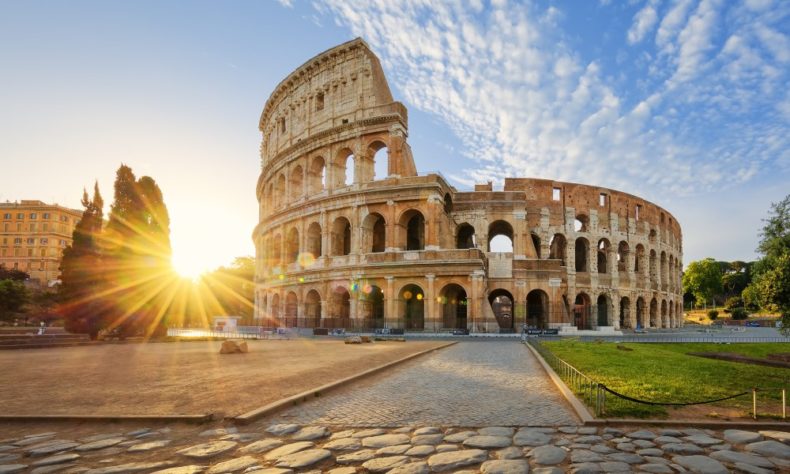
Prefer doing everything on your own? That works too. Rome is a great city for independent wandering, but some sights need planning. Buy tickets to the Colosseum in advance, because the queues can be brutal and “I’ll just see when I get there” is not always a winning strategy here. Also check the ticket details carefully. Some tickets include access to special areas such as the arena floor or underground tunnels, while others only cover the standard visit.
The underground section is worth considering if you want to see a less obvious side of the Colosseum. It gives you a better sense of what happened behind the scenes before the spectacle began – the passageways, holding areas, and mechanics of one of ancient Rome’s most famous landmarks. It is darker, more atmospheric, and much more interesting than simply taking the same outside photo as everyone else.
After that, leave space in the day to wander. Rome rewards travellers who do not rush. Walk from the Colosseum toward the Roman Forum, continue to Piazza Venezia, then let yourself drift toward narrow streets, espresso bars, churches, and small restaurants that look better than whatever was saved in your itinerary. In Rome, the detours are often the point.
Visit the Trevi Fountain early in the morning, before the city fully wakes up and before the crowds take over every possible photo angle. Rome is not exactly known for being quiet, but at that hour the fountain feels much more magical. The marble glows softly, the streets are calmer, and you can actually hear the water instead of a hundred people negotiating selfies.
Make it your solo Rome breakfast moment. While other travellers are still eating at the hotel buffet, grab a coffee and a cornetto nearby, then walk over to the fountain and enjoy one of the city’s most famous sights before the day becomes busy. It is simple, slightly dramatic, and exactly the kind of small travel ritual that feels better when you do it on your own schedule.
And yes, there is the coin tradition. According to the famous legend, if you toss a coin into the Trevi Fountain over your left shoulder, you will return to Rome one day. You do not have to believe it. But you are already there, the coin is small, and the worst-case scenario is that you have participated in one of the city’s most harmless tourist rituals.
So try it. Rome is the kind of place worth coming back to anyway.
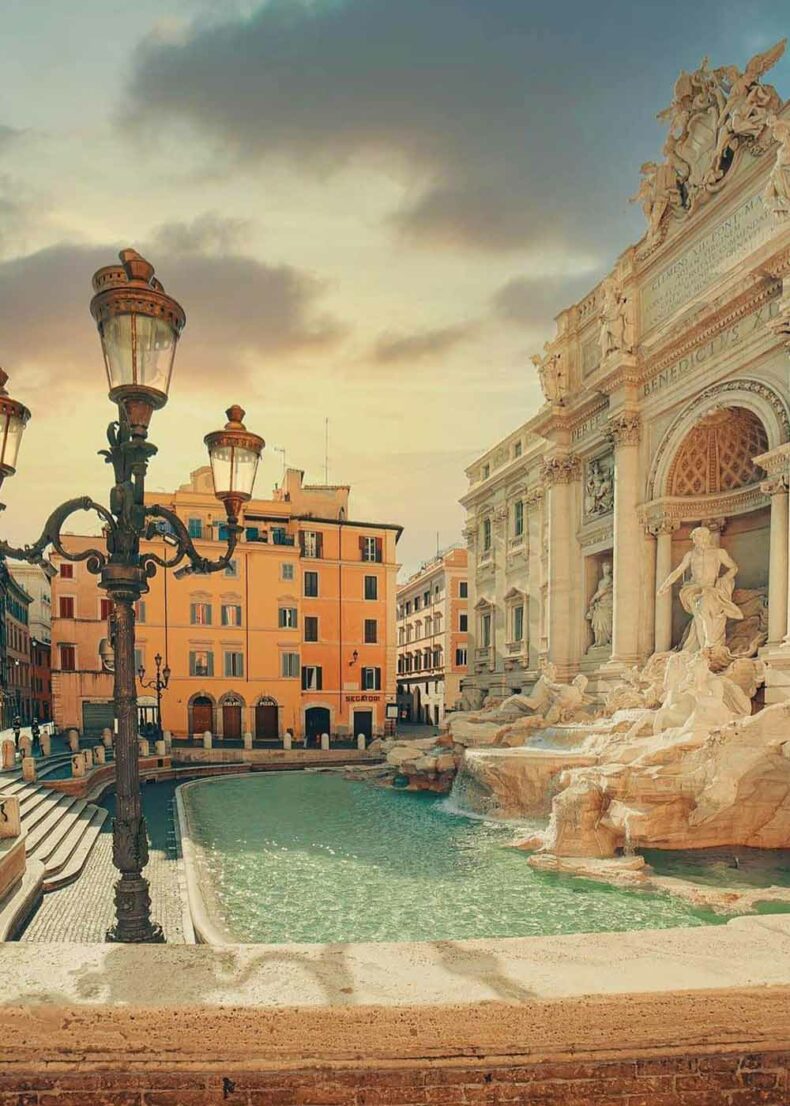
Photo on Instagram
For a more colourful side of Rome, head to Campo de’ Fiori Market. This lively square is full of fruit, flowers, spices, oils, sauces, pasta, cheese, olives, balsamic vinegar, and enough edible souvenirs to make your suitcase nervous.
It is a great stop for solo travellers because you can browse without rushing, taste a few things, and build your own small Roman picnic. Try handmade olive oil, fresh fruit, local cheese, olives, and a small sip of limoncello if you find a good stall. Sweet, sour, sharp, salty – this is the kind of place where your bag can go from empty to dangerously full within an hour.
The name Campo de’ Fiori means “field of flowers”, because this area was once a meadow. Today, it is less meadow and more market theatre: vendors calling out, bright produce stacked high, tourists comparing jars of pesto, and locals moving through the square with much more confidence than everyone else.
Go in the morning, when the market is at its most active, and do not treat it only as a place to buy things. Treat it as part of the Rome experience. Walk around, taste what looks good, pick up something small for later, and enjoy the fact that in Rome, even grocery shopping can feel like sightseeing.
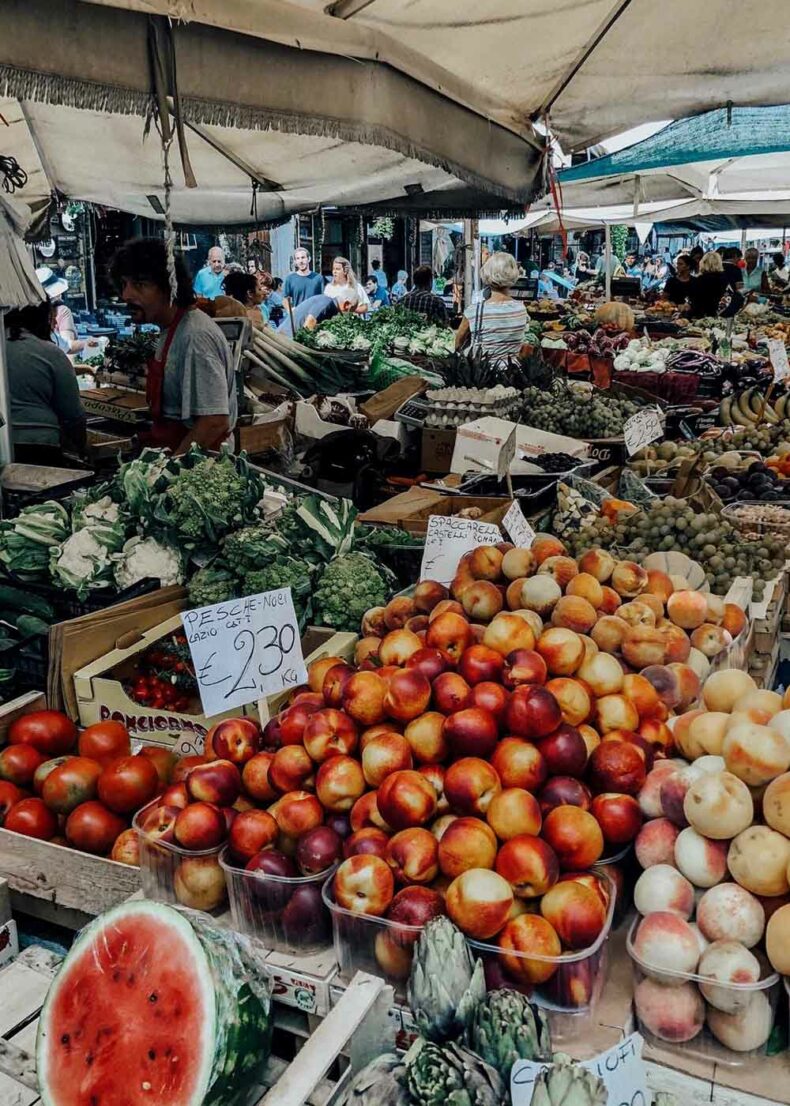
Photo on Instagram
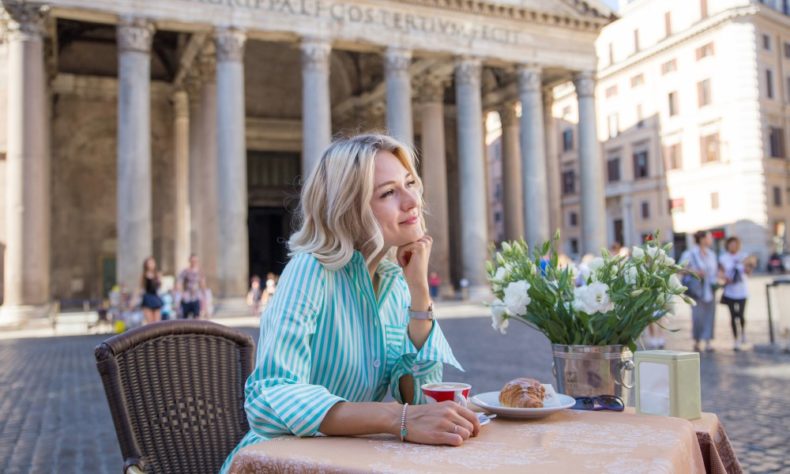
Rome also has its own rhythm when it comes to coffee, and it is worth following at least once. Cappuccino is usually a breakfast drink, best enjoyed in the morning with a cornetto before the day properly begins. After lunch, keep it simple and order an espresso.
Do it the Italian way: stand at the counter, drink it quickly, and move on with your life. No giant takeaway cup, no complicated syrup situation, no pretending coffee needs to be a full afternoon activity. In Rome, espresso is short, strong, and practical – more like a pause button than a lifestyle statement.
Then, when evening comes, switch to wine. Sit down for dinner, order something simple and Roman, and let the day slow down properly. A plate of pasta, a glass of local wine, and a table outside on a warm evening can do more for your mood than any perfectly planned itinerary.
The best part for solo travellers is that eating and drinking alone in Rome does not have to feel awkward. Stand at the counter for coffee, sit at a small table for pasta, order a glass of wine, and enjoy the fact that nobody is rushing you through the moment.
And now, open the most important Rome checklist: food.
Start with the obvious classics, because they are classics for a reason. Pizza, pasta, tiramisu, and at least one gelato a day should be treated less like suggestions and more like basic trip maintenance. You are in Rome. This is not the time to pretend a sad airport sandwich counts as a meal.
For pasta, try Roman favourites such as carbonara, cacio e pepe, amatriciana, or gricia. They are simple dishes, but that is exactly the point – a few good ingredients, handled properly, can do more than a long menu full of complicated promises. For pizza, grab a slice of pizza al taglio during the day, then sit down for a proper Roman-style pizza in the evening if you still have room.
Tiramisu is the kind of dessert that needs no serious argument. Order it after dinner, or buy a small portion from a dedicated dessert shop and eat it somewhere scenic with no shame at all. As for gelato, make it a daily rule. Look for places where the colours are more natural and the gelato is stored in covered metal containers rather than piled up in bright artificial mountains.
Rome is a city where eating well does not have to be formal. Some of the best moments can be a quick espresso at the counter, a slice of pizza eaten while walking, pasta at a tiny table, or gelato melting faster than expected on a sunny street. Solo travel makes this even easier – you can follow your appetite instead of negotiating lunch plans.
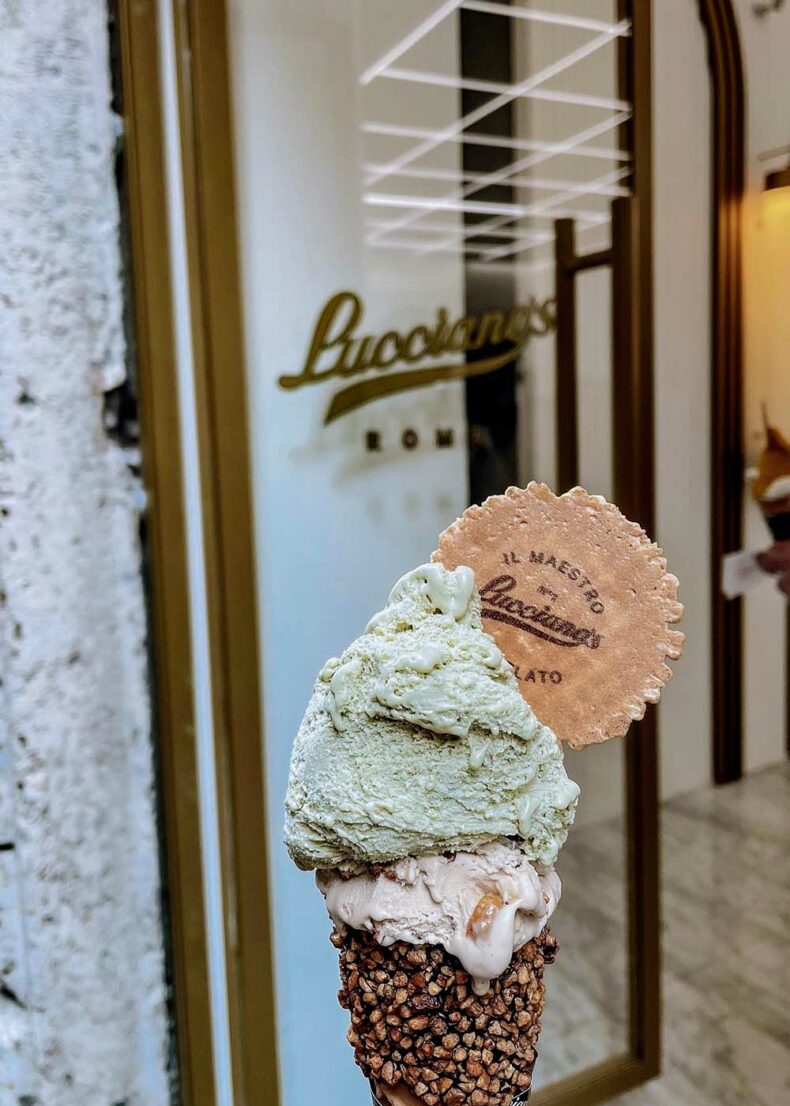
Photo on Instagram
In summer, Rome becomes even more delicious. You will often see zucchini and zucchini flowers on menus, sometimes grilled and served simply with olive oil, garlic, and mint, sometimes fried until crisp and filled with cheese or anchovies. They taste like the season itself: light, fresh, and exactly right after a long day of walking through hot stone streets.
Another classic summer snack is melon with prosciutto. It is almost too simple to count as a dish, but that is the point. Sweet, juicy melon wrapped in paper-thin slices of salty prosciutto is one of those combinations that makes you wonder why anyone bothers overcomplicating food.
By the end of June, the first figs start to ripen, peaches become dangerously good, and market stalls turn into small displays of edible happiness. Buy fruit from a market, eat it outside, and call it lunch if you want. Rome will not judge you. It has seen much stranger behaviour over the last few thousand years.
The problem with Rome is that a short trip will never be enough. You can visit the Colosseum, toss a coin into the Trevi Fountain, drink espresso at the counter, eat gelato every day, and still leave with a long list of things you did not manage to see, taste, or properly admire. To experience everything Rome has to offer, you would probably need to move there.
Perhaps the coin you tossed into the fountain will fulfil the prophecy after all. Until then, start with a flight, a few free days, and a very serious appetite.
Book your solo escape to Rome with airBaltic and let the city take care of the history, sunshine, pasta, gelato, and all the beautiful reasons to return.
Split, Croatia
Known as the flower of the Mediterranean, Split is one of those places where a solo trip can feel like a proper reset. It has the sea, the stone streets, the sunshine, the cafés, the history, and just enough outdoor adventure to make you feel like you did more than simply lie around eating ice cream by the water. Though, to be clear, there is nothing wrong with that either.
Split is Croatia’s second-largest city, but it does not feel too large or difficult to understand. The centre is compact, walkable, and full of life, which makes it especially good for solo travellers. You can start the morning with coffee in the old town, wander through ancient Roman walls by lunch, climb a hill in the afternoon, and end the day by the sea without needing a complicated plan.
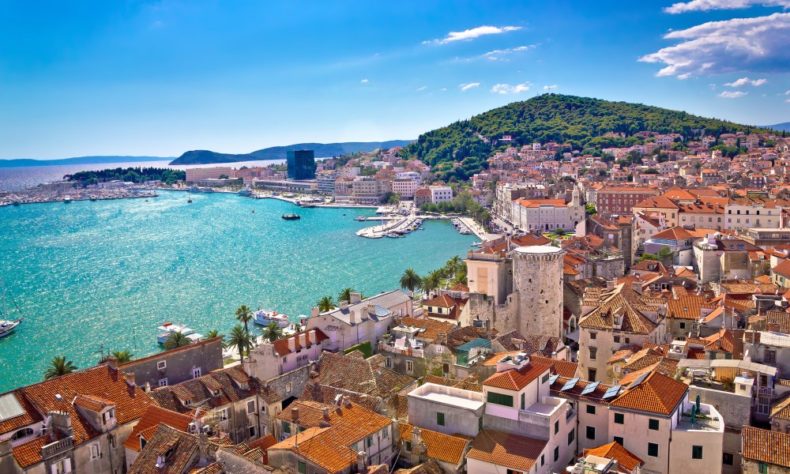
After your flight, stretch your legs with a walk – or, more accurately, a climb – up Marjan Hill. It rises just beside the city and gives you one of the best views over Split, the harbour, the Adriatic Sea, and the nearby islands. It is the kind of first-day activity that helps you understand where you are: city behind you, sea in front of you, and the whole Dalmatian coast suddenly looking very tempting.
Marjan is also perfect if you want a break from the busy old town. There are walking paths, pine trees, viewpoints, small churches, rocky swimming spots, and plenty of places to stop and pretend you are only resting because you want to admire the view. Go in the morning or later in the afternoon if you want to avoid the strongest sun.
And Split is not only for slow walks and pretty views. If you like being active, there are plenty of hiking trails around the city and the nearby coast. Rock climbers will also find good places to practise, especially around Marjan and the surrounding limestone cliffs. You do not need to turn the whole trip into a fitness holiday, but it is nice to know that the option is there.
That is what makes Split work so well for solo travel. You can make it lazy, active, cultural, coastal, or a little bit of everything. No one is there to argue whether the day should be a beach day or a hiking day. You can do both, then reward yourself with dinner by the sea.
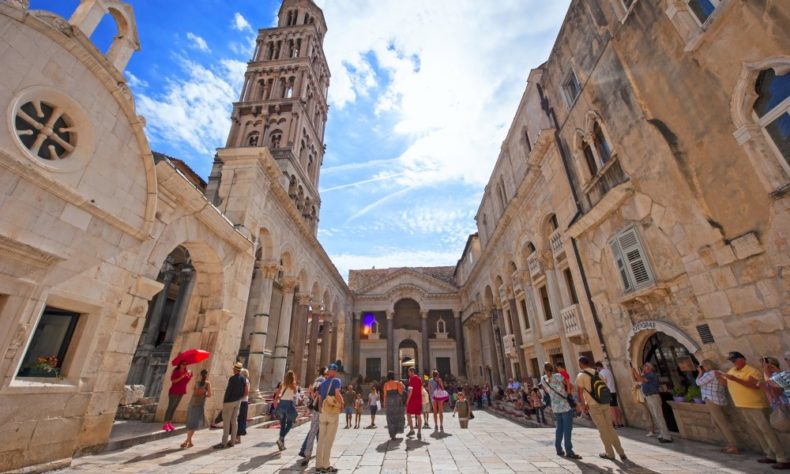
Before you head for the trails, beaches, or island views, start with the reason Split feels so unusual: Diocletian’s Palace. This UNESCO-listed site is not a palace in the neat, museum-like sense. It is more like an ancient Roman world that the modern city grew into. People still live, work, drink coffee, open shops, hang laundry, and rush through their day inside walls built for a Roman emperor.
That is what makes it so impressive. You are not just looking at ruins from behind a rope. You are walking through them. Stone corridors turn into cafés, old gates lead to busy squares, and narrow streets suddenly open into courtyards where history feels very much alive. For solo travellers, it is a great place to wander without a strict route. Get lost a little. That is the correct method here.
While exploring the palace, look out for the sphinxes. They were brought from Egypt, which makes them one of the more unexpected details hidden among Split’s Roman stonework. Finding them can become a small challenge of its own – the kind of low-effort travel mission that gives your walk a little extra purpose.
Nearby, you will find Pazar Market, a lively open-air market that is best visited in the morning. It usually starts early and is at its busiest before noon, so go before the heat becomes too serious. Browse the stalls, buy fresh cherries or peaches, maybe pick up something salty for later, and let breakfast turn into a market picnic.
From there, Bačvice Beach is only about a 10-minute walk away. It is not a wild hidden beach, and that is exactly why it is fun. It is local, social, easy to reach, and full of small scenes to watch. Bring your fruit, sit by the water, and let the city shift from ancient stone to seaside laziness in a matter of minutes.
At Bačvice, you may also see locals playing picigin. It is difficult to explain without making it sound stranger than it is, but that is part of the charm. A small ball is involved, the game is played in shallow water, and the goal seems to be keeping the ball in the air with as much athletic drama as possible. You do not need to understand every rule. Just watch for a while – it is one of those local traditions that makes Split feel less like a postcard and more like a real place.
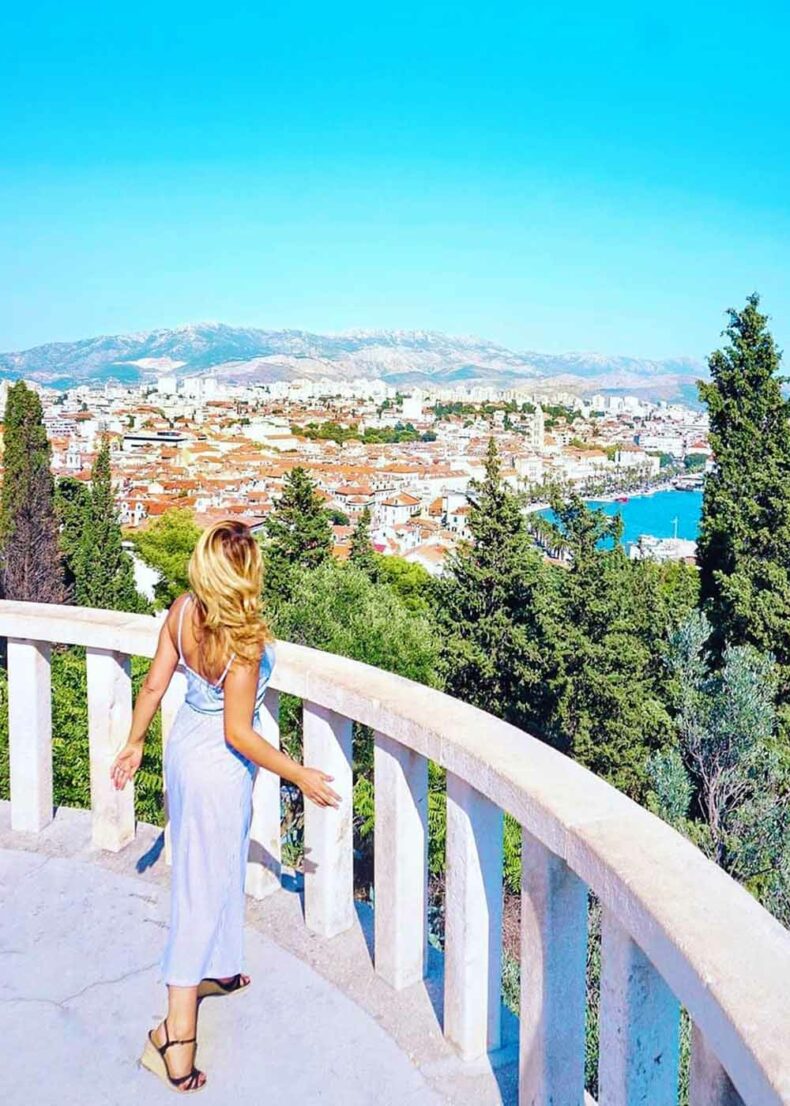
Photo on Instagram
From Split, the islands are almost impossible to ignore. They sit right there on the horizon, looking far too blue and tempting to be treated as background scenery. So do not stop at the city. Give yourself at least one island day.
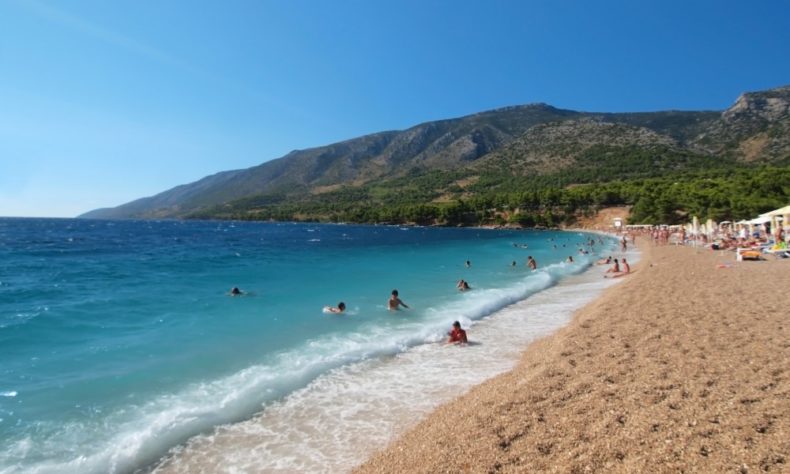
Brač is one of the easiest and most rewarding choices from Split, especially if you want beaches, clear water, small towns, and that very specific Croatian feeling of doing very little while somehow having a perfect day. The island is especially known for Zlatni Rat, often called the Golden Horn or golden beach, near the town of Bol. Ask locals to point you toward it, and they will know exactly where you mean.
The beach is famous for its unusual shape, stretching out into the Adriatic like a pale stone tongue surrounded by turquoise water. It changes slightly with the wind and currents, which makes it feel a little different depending on when you visit. It is not a secret beach, and you will not have it all to yourself, but it is popular for a reason. Bring swimwear, sunscreen, water, and enough patience to accept that everyone else also wanted the same perfect beach day.
If you want to see more in less time, book a guided boat tour from Split. Some tours cover several islands in one day, often combining swimming stops, small coastal towns, caves, lagoons, and enough sea views to make your camera roll look ridiculous. It is also a practical option for solo travellers because the structure is already handled for you: boat, route, stops, people, return time. You just show up and enjoy the Adriatic.
For something slower, rent a SUP board and take to the water. It is a good way to get a tan, a better way to test your balance, and possibly the fastest way to realise the sea looks calmer from the shore than it feels under your feet. Still, that is part of the fun. Paddle for a while, fall in if needed, climb back up, and call it a proper Mediterranean workout.
Island-hopping from Split is exactly the kind of solo travel day that feels easy but memorable. You do not need to over-plan it. Choose one island, or let a boat tour do the choosing for you, and spend the day between beaches, boats, sun, salt water, and the very reasonable thought that staying longer would not be a bad idea.
A day trip to Omiš is a strong idea if you want to add a little adventure to your Split escape. The town sits where the Cetina River meets the Adriatic Sea, with dramatic cliffs, clear water, old stone streets, and enough outdoor activities to make it feel completely different from a lazy beach day.
For active travellers, rafting on the Cetina River is one of the main reasons to go. The water is cold, the scenery is impressive, and the route gives you a mix of calm floating, small rapids, swimming stops, and canyon views. It is exciting without feeling too extreme, so you do not need to be a professional adrenaline addict to enjoy it.
It is also a good option for solo travellers. Rafts usually take several people, often at least five, so you can easily join a group without needing to organise one yourself. Book a spot, show up, get your helmet and paddle, and let the river provide both the activity and the company.
After rafting, stay in Omiš for a little while instead of rushing straight back to Split. Walk through the old town, climb up to one of the fortresses if you still have energy, grab something to eat, and enjoy the view where the river, mountains, and sea all meet. It is the kind of day trip that makes your solo holiday feel more varied – one day Roman ruins and beaches, the next cold river water and canyon walls.
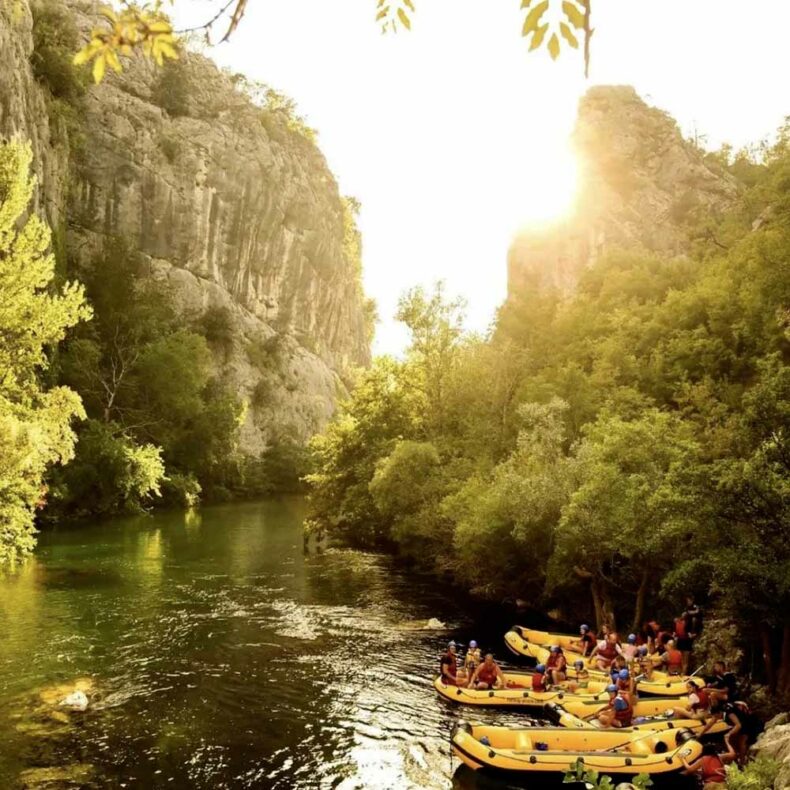
Photo on Instagram
In Dalmatia, food is part of the landscape. Seafood, olives, almonds, figs, fresh herbs, local wine, and good olive oil appear everywhere – on market stalls, in small taverns, on seaside menus, and on plates that look simple until you taste them. Avoiding these things would be difficult, and frankly, a mistake.
Start with seafood. This is the coast, so fish, mussels, squid, octopus, prawns, and seafood stews all make sense here. Order something grilled with olive oil and lemon, or try brudet, a rich seafood stew cooked with wine, tomato, herbs, and whatever the sea has kindly provided that day. It is warm, savoury, and exactly the kind of dish that tastes better near the Adriatic.
For something more traditional and meat-based, try pašticada. This Dalmatian classic is slow-cooked beef in a sweet and sour sauce, usually made with garlic, carrots, wine, vinegar, dried fruit, and spices. It is rich, comforting, and best eaten slowly, preferably in a proper konoba – the kind of humble local tavern where the food matters more than the table setting. Konoba Fetivi is a good place to look for exactly that feeling.
Then there are the smaller things that make Dalmatian food so good: bread dipped in olive oil, salty cheese, figs eaten in the sun, almonds bought from a market, a glass of local wine, or a plate of olives that somehow disappears before the main course arrives. Split is not a destination where you need to chase complicated food trends. The good things are already there.
And that is the beauty of Split as a solo destination. You can spend the morning inside Roman walls, swim in the afternoon, take a boat to an island, join a rafting trip, watch locals play picigin, and end the day with seafood, wine, and warm air coming in from the sea.
Ready for a solo trip with sunshine, islands, ancient stone streets, beach days, and proper Dalmatian food? Book your flight to Split with airBaltic and let the Adriatic do the rest.
Time to take yourself somewhere new
Solo travel does not have to mean disappearing into the wilderness with a backpack and a dramatic life plan. Sometimes it simply means booking the trip you want, choosing the city that fits your mood, and giving yourself permission to enjoy it without waiting for someone else to join.
Amsterdam is perfect for slow canal walks, museums, cafés, cheese, and curious little stops that make the day feel personal. Berlin gives you freedom, nightlife, history, street food, bike rides, and the feeling that nobody is judging your plans. Rome is made for solo wandering, early-morning fountains, pasta, espresso, markets, and ancient streets that make even a short walk feel cinematic. Split brings the sea into the picture, with islands, beaches, Roman walls, rafting, fresh seafood, and warm Dalmatian evenings.
Each city offers a different kind of solo trip, but the point is the same: you decide the pace. You can wake up late, start early, change your mind, eat when you want, stay longer somewhere beautiful, skip what does not interest you, and discover what kind of traveller you are when the itinerary belongs only to you.
So maybe this is the year to stop waiting for the perfect travel partner. Choose the destination, book the flight, pack what you need, and take yourself somewhere worth remembering.